Researching CBG: A Quick Review
Phytocannibinoids are useful in therapeutics for a variety of purposes. By now many are aware there are well over 100 cannabinoid compounds found in the cannabis plant, Cannibigerol or CBG, has...
 Mike Robinson
6 min read
Phytocannibinoids are useful in therapeutics for a variety of purposes. By now many are aware there are well over 100 cannabinoid compounds found in the cannabis plant, Cannibigerol or CBG, has recently gained quite a bit of attention with consumers as the hemp and cannabis industries have taken note of the research behind this unique and efficacious plant constituent.
Medical claims may not be made in regards to CBG or CBD – so let's just read what research says on what CBG is and how it may help us in various ways both now and in the future as the medical industry ventures into utilization of cannabinoid medicines. Cannabis and hemp industries are both embracing educating during the current downtime of public events. Mike Robinson, the founder of the Global Cannabinoid Research Center, will be the Session Chairman for the Organizational committee at the 16th International Conference on Cancer and Cancer Therapy coming up on September 21-22, in London, UK (Virtual Webinar). It's beneficial to learn more about the promising research being done on plant based alternatives – many are becoming their own best source of information so we'd like to help.
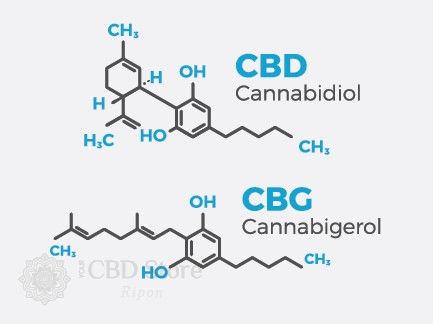
So what exactly is CBG? CBG is the offspring of CBGA, which is also the direct precursor to mothers or acid compounds of CBD, CBC, and THC. During plant growth most of CBGa is converted into other cannabinoids, primarily THC and CBD, leaving less than 1% of CBGa in the plant itself and minimal amounts by the time it's ready for use – unless the type of plant has genetics that create CBG and stop there before the conversion to other cannabinoids.
Because of this breeders are now experimenting with genetic mutation and cross breeding to yield strains higher in CBGa. CBG itself holds therapeutic benefits many patients will find value in. CBG works by activating A2-adrenoceptors, binds to CB1 and CB2, and also can block 5HT1a and CB1 receptors. (Cascio et al 2010Evidence that the plant cannabinoid cannibigerol is a highly potent A2-adrenoceptor agonist and moderately potent 5HT1a receptor antagonist). But what does all this mean?
One of the most researched therapeutic benefit of CBG is its ability to act as a neuroprotectant and in turn can help with an array of neurodegenerative conditions. CBG helps to prevent neuronal cell loss and is a potential treatment in conditions involving oxidative stress as well. (Gugliandolo et al 2018 In vitro model of neuroinflammation: efficacy of cannibigerol, a non psychoactive cannabinoid)
In 2012 CBG reduced neuroinflammation in a chronic model of multiple sclerosis (Granja et al 2012 A cannibigerol quinone alleviates neuroinflammation in a chronic model of multiple sclerosis) and in 2015 studies showed the therapeutic potential for patients with Huntington’s Disease. (Valdeolivas et al 2015 Neuroprotective properties of cannibigerol in Huntington’s Disease: studies in R6/2 mice and 3 nitoproplonate lesioned mice) When combined with CBD, the anti-inflammatory, anti-apoptotic, and anti-oxidant properties of both CBG and CBD show promising therapeutic benefits for diseases like ALS, in addition to many other neurodegenerative diseases. (Mammana et al 2019)
Many contemplate if combinations of non psychotropic cannabinoids could further counteract neuroinflammation? Effectiveness of CBD associated with CBG) CBGs anti-inflammatory properties is also a therapeutic option for Irritable Bowel Disease. A 2013 study showed CBG attenuated murine colitis, reduced nitric oxide production in macrophages, and reduced ROS formation in intestinal epithelial cells. (Borelli et al 2013 Beneficial effect of the non psychotropic plant cannabinoid cannibigerol an experimental inflammatory bowel disease)
The Enterouge effect is sought after by many – this is when multiple constituents combined do more together than they would on their own or with a plant it's when the entire thing does much more when it's all together when it's combined. It's important to keep in mind this research and it's references are based on the single cannabinoid and what the researchers are finding as it's potential as they look for future medicines to replace the synthetic ones we have to choose from today. Much of the research done on these cannabinoids is done for pharmaceutical purposes – most just don't know that.
Many have heard about research that leans towards cannabis and it's constituents having benefits that could help patients with cancer. CBG is included in the many cannabinoids that can have shown high potential and therapeutic benefit to various cancers and the initiation of cancer formation within the body. In 2014 in vivo CBG inhibited the growth of xeno graft tumors as well as chemically induced colon carcinogenesis. CBG interacted with specific targets in carcinogenesis and potently blocked the transient receptor potential M8 (TRPM8), activated TRPA-1, TRPV1, and TRPV2 channels, blocked 5HT1a receptors and also inhibited the uptake of endocannabinoids. (Borelli et al 2014 Colon carcinogenesis is inhibited by the TRPM8 antagonist cannibigerol, a cannabis derived non psychotropic cannabinoid).
CBG and appetite have been researched briefly, but holds promising potential for disordered eating, cachexia, chemo induced appetite loss, and more. A 2016 study showed CBG elicits hyperphagia by reducing latency to feed and increasing meal frequency in rats, while not producing any negative neuro motor side effects at 30-120mg/kg dosing. (Brierly et al 2016 Cannibigerol is a novel well tolerated appetite stimulant in pre satiated rats) In addition CBG also shows opposing effects on the emesis response and in turn can offer benefit to patients experiencing hyperemesis syndrome, characterized by cannabis use, cyclic vomiting, and excessive hot water bathing (Galli et al 2011 Cannabinoid hyperemesis syndrome).
In 1990 CBG was presented as a potential therapeutic for glaucoma as the cannabinoid increased aqueous outflow and decreased the intraocular pressure in cats. (Colasanti et al 1990 A comparison of the ocular and central effects of THC and CBG) More research needs to be done regarding CBG and its effects on the eyes but what has been done is promising in that someday there may be some alternatives that people don't have today.
I know what you are thinking, what else can CBG possibly due? Well it can also help your skin according to researchers and in various ways. CBG has the potential to treat dry skin syndrome as it increases basal sebaceous lipid synthesis. (Olah et al 2016 Differential effectiveness of selected non psychotropic phytocannibinoids on humansebocyte functions implicates their introductions in dry seborrheic skin and acne treatment). Further research must be done to quantify findings such as these.
Sarah Scwhefel, Research Analyst, Global Cannabinoid Research Center.
with
Mike Robinson, Founder, Global Cannabiniod Research Center
Disclaimer: This article expresses opinion based on research, there is no medical information or claims made or insinuated. Promise of plant medicine in research and contents within this website has not been evaluated by the FDA. Medical Patients should seek medical advice from a Physician.
This article is educational commentary from GCRC. It is not a report of study findings and is not medical advice. Speak with a qualified healthcare professional about your own health.