
Beyond the Addiction Debate: Medical Cannabis Study Finds CUD in Only 5% of Chronic Pain Patients
 Mike Robinson
Updated

For decades, discussions about medical cannabis have often focused on two competing arguments. One side emphasizes its potential to help patients manage difficult medical conditions, while the other raises concerns about addiction, injuries, and problematic substance use.
But what happens when researchers move beyond those arguments and actually follow patients for an extended period? A new study published November 20, 2026, provides some valuable answers.
“Low Prevalence of Adverse Outcomes in an 18-Month Follow-Up of Individuals With Chronic Pain Recently Certified for Medical Cannabis” followed 223 adults in New York who had recently received medical cannabis certification for chronic pain [1].
Researchers examined cannabis use disorder, opioid use disorder, hazardous alcohol consumption, cannabis diversion, injuries, and emergency department visits. The findings were encouraging. Most participants didn’t develop the specific adverse outcomes researchers were monitoring, despite reporting regular cannabis consumption.
However, this wasn’t an experiment proving medical cannabis was safe or effective. It was an observational investigation examining what occurred within a particular patient population. That distinction is essential when interpreting these results.
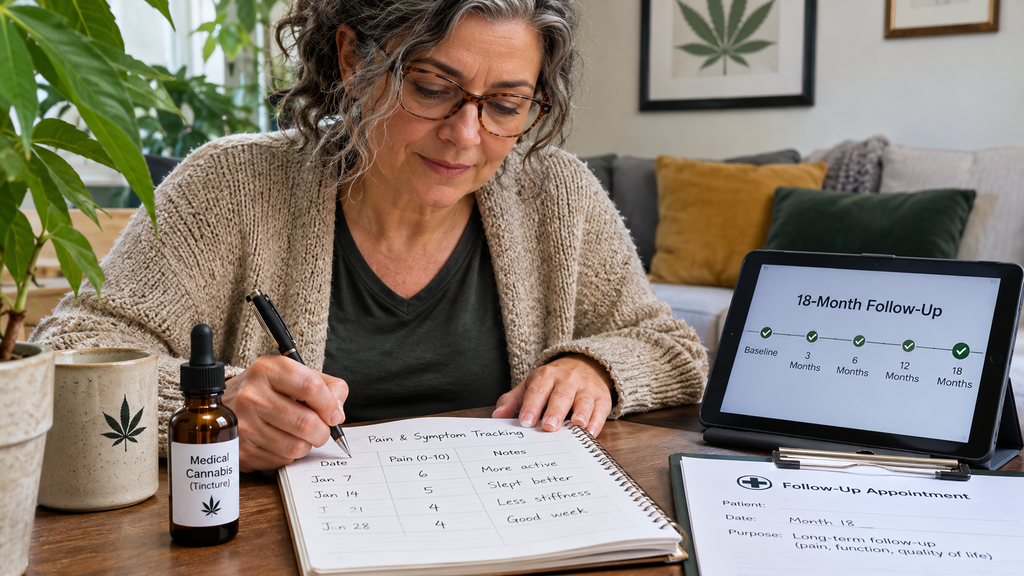
Following 223 Patients Through 18 Months of Medical Cannabis Care
The research team, led by Yuval Zolotov, followed adults with chronic or severe pain who had recently entered New York’s medical cannabis certification program. Participants averaged 56.3 years of age, with women representing 54.3% of the group.
Researchers collected information at enrollment and conducted additional assessments every three months. Participants also completed online surveys every two weeks describing their consumption of medical cannabis and cannabis obtained outside licensed medical dispensaries.
The study used structured diagnostic interviews, standardized questionnaires, and additional questions about substance use and injuries [1]. Importantly, these patients weren’t necessarily new to cannabis. Approximately 73.5% reported cannabis consumption during the month before enrollment, and 80.3% reported opioid use during that period.
Although all participants were newly certified, only 82.1% reported using dispensary-sourced medical cannabis at least once during follow-up. That’s an important detail. The investigation followed newly certified patients, not a group of people who had all begun consuming cannabis for the first time.

Cannabis Use Disorder Was Identified in Only 4.9% of Patients
One of the study’s most significant findings involved cannabis use disorder, or CUD. During the 18-month follow-up, 11 participants (4.9% of the study population) met diagnostic criteria for CUD at one or more follow-up assessments [1].
Cannabis use disorder involves problematic consumption associated with symptoms such as difficulty controlling use, craving, or continued consumption despite harmful consequences. The researchers found that most identified cases were mild, although moderate and severe cases also occurred.
Interestingly, the study identified 16 participants, or 7.2%, who met CUD criteria at enrollment. Four of the 11 participants identified during follow-up had also met criteria at baseline. These figures shouldn’t be interpreted as proof that entering a medical cannabis program reduced cannabis use disorder. The study wasn’t designed to establish that relationship.
There’s also an important limitation involving how CUD was assessed. The diagnostic interview initially screened for cannabis use associated with getting high or altering mood. Patients consuming cannabis primarily for pain might not describe their use that way, potentially causing some cases to be missed.
The authors also noted that tolerance and withdrawal can complicate CUD assessments in medically supervised patients. These findings reinforce the need to distinguish regular medication use, physiological dependence, and clinically significant problematic consumption.
Cannabis Consumption Was More Frequent Among Patients With CUD
Researchers also compared cannabis use frequency between participants who met diagnostic criteria for CUD and those who didn’t. During the first six months, participants with CUD reported using medical cannabis an average of 9.6 days per two-week period, compared with 6.4 days among those without CUD.
Unregulated cannabis consumption followed a similar pattern, averaging 5.3 days among those with CUD and 2.7 days among those without the diagnosis [1]. The researchers observed similar differences in medical cannabis use frequency during subsequent follow-up periods.
However, these comparisons weren’t statistically significant, partly because so few participants met criteria for CUD. That means the study couldn’t establish that more frequent cannabis consumption increased the risk of developing the disorder.
For patient education, it’s important to recognize that frequency alone doesn’t establish addiction. Clinicians need to consider whether consumption causes impairment, whether patients can manage their use, and whether their overall health and functioning are affected.
Opioid Use Disorder Was Uncommon During Follow-Up
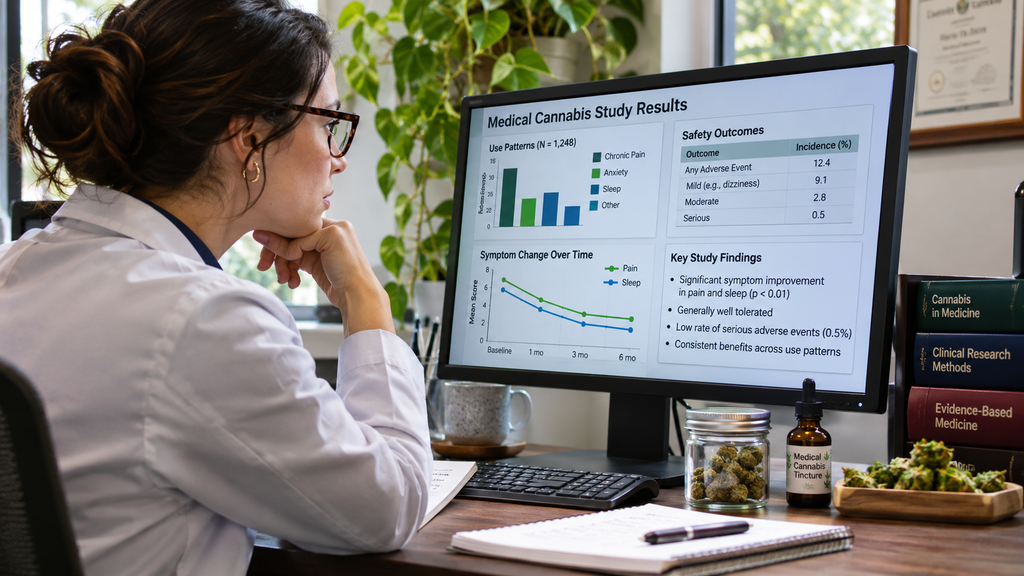
Another important finding involved opioid use disorder. Only two participants, representing 0.9% of the cohort, met diagnostic criteria for opioid use disorder during follow-up [1].
This is particularly relevant because the study population consisted of adults living with chronic pain, many of whom had experience with opioid medications. At enrollment, approximately four out of five participants reported opioid use during the preceding month.
Finding relatively few cases of opioid use disorder during follow-up is encouraging, but there’s a critical limitation. The study doesn’t establish that medical cannabis prevented opioid addiction, reduced opioid prescriptions, or helped patients discontinue opioid therapy.
Those questions require separate analyses designed to evaluate changes in opioid consumption and the factors influencing those changes. What this investigation demonstrates is that diagnosed opioid use disorder was uncommon in this particular group during the observed period.
That’s valuable information without needing to turn it into a claim the researchers didn’t prove.
Injuries, Alcohol Use, and Cannabis Diversion
The researchers examined several additional outcomes that help provide a broader picture of patient safety. Across the 18-month follow-up, 6.7% of participants met criteria for hazardous alcohol use, 4.0% reported cannabis diversion, and 1.8% reported cannabis-related injuries [1].
Cannabis diversion refers to medical cannabis being transferred outside authorized channels, including sharing, selling, or having it taken away. These outcomes were relatively uncommon, although each deserves consideration.
The researchers also monitored emergency department visits. Approximately 16% to 20% of participants with available observations reported an emergency department visit during each six-month study period. However, the investigators didn’t determine whether those visits were caused by cannabis use.
That’s why emergency department utilization shouldn’t automatically be classified as either evidence of cannabis harm or evidence of cannabis safety. The findings suggest that several monitored adverse outcomes occurred infrequently, but they don’t cover every possible medical complication associated with cannabis consumption.

Why New York’s Medical Cannabis Program Matters
One particularly interesting aspect of this research involves the regulated environment in which participants received their medical cannabis certification. When the study began, New York operated a highly structured medical cannabis program involving physician certification and pharmacist participation.
Products available through the program were initially restricted primarily to oil-based preparations, including tinctures. Over the course of the research, state regulations changed, medical cannabis access expanded, and adult-use cannabis legalization altered the available marketplace.
The researchers suggested that participant characteristics, regulatory oversight, and the structure of the medical program may help explain some of the findings [1]. However, they couldn’t establish whether those factors directly reduced adverse outcomes.
This creates an important opportunity for future research comparing patients across different regulatory systems, healthcare environments, and patterns of cannabis access. A regulated medical program may offer monitoring and education opportunities that aren’t always present in other settings, but its effectiveness in reducing particular risks needs to be demonstrated.
The Limitations That Keep These Findings in Perspective
The study offers valuable longitudinal information, but several limitations prevent broad conclusions. First, there was no comparison group of similar chronic pain patients who didn’t receive medical cannabis certification. Without that comparison, researchers couldn’t establish whether certification changed the frequency of adverse outcomes.
Second, 223 participants represent a relatively modest sample. Uncommon complications may not appear frequently enough to identify meaningful patterns. Third, cannabis consumption was self-reported, and the study couldn’t fully account for differences in cannabinoid potency, product composition, or administration methods.
The research also focused primarily on substance-related and injury-related outcomes rather than a comprehensive assessment of cardiovascular, cognitive, and psychiatric safety. Finally, the findings may not apply equally to younger adults, patients with different medical conditions, or individuals obtaining cannabis outside regulated medical programs.
These limitations don’t invalidate the results. They establish where the evidence ends and where additional investigation needs to begin.

GCRC Perspective: Medical Cannabis Research Needs More Long-Term Patient Data
For those of us working to advance cannabinoid medicine, this research addresses something that’s frequently missing from the conversation: what patients actually experience over time.
Laboratory research helps explain biological mechanisms, and controlled clinical trials can evaluate specific treatments. But longitudinal patient studies provide another valuable perspective by examining outcomes during everyday medical care. The relatively low occurrence of several adverse outcomes in this cohort is encouraging, particularly among adults managing chronic pain.
However, the findings shouldn’t be used to argue that medical cannabis is harmless, that addiction never develops, or that cannabis automatically provides a safer alternative to opioids. The stronger message is that patients deserve individualized care supported by evidence, accurate product information, appropriate follow-up, and access to clinicians who understand cannabis medicine.
At Global Cannabinoid Research Center, our goal is to make research accessible to everyone involved in that process, from patients and physicians to pharmacists, budtenders, and product formulators. Research like this can help replace assumptions with measured observations while identifying the questions scientists still need to answer.
Eighteen months of follow-up provides a meaningful contribution, but understanding medical cannabis safety across different populations, products, and treatment periods will require considerably more investigation. The findings offer encouraging evidence from one group of chronic pain patients without establishing universal safety.
That’s the kind of distinction responsible cannabinoid education needs to preserve.
Mike Robinson
Global Cannabinoid Research Center
References
[1] Zolotov, Y., Slawek, D. E., Zhang, C., et al. (2026). “Low Prevalence of Adverse Outcomes in an 18-Month Follow-Up of Individuals With Chronic Pain Recently Certified for Medical Cannabis.” Substance Use & Addiction Journal. Published 11/20/2026.
This article is educational commentary from GCRC. It is not a report of study findings and is not medical advice. Speak with a qualified healthcare professional about your own health.