
Industrial Hemp Beyond Cannabinoids: New Research Reveals How Hemp Proteins Could Transform Plant-Based Delivery Technology
 Mike Robinson
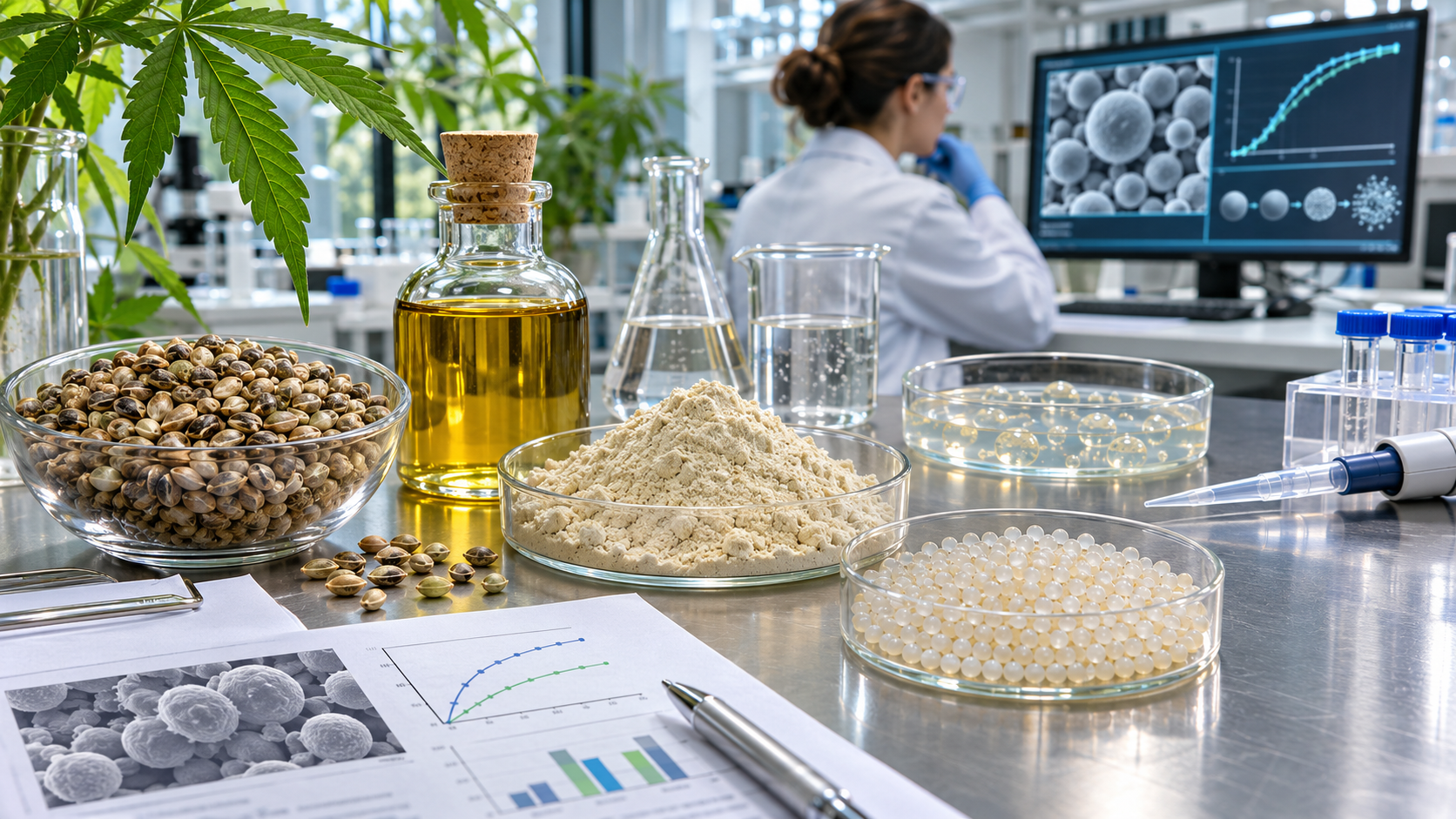
Industrial Hemp has spent years standing in the shadow of cannabinoids, particularly CBD. Still, some of the most interesting developments in plant science are happening without cannabinoids being involved at all.
A new study published November 3, 2026, shows how proteins extracted from hemp seeds can protect hemp seed oil inside microscopic delivery systems. Researchers compared hemp protein with whey protein, a widely used ingredient in food and nutritional formulations, and found that hemp offered several advantages [1].
The study, “Development of a homologous plant-based delivery system via SEDS: Comparative physicochemical and release characterization of hemp vs. whey protein microcapsules,” investigates a sophisticated approach to protecting sensitive oils during processing, storage, and digestion.
Rather than using hemp merely as a nutritional ingredient, the researchers used one part of the plant to protect another.
For those of us studying plant medicine and formulation technology, that’s where this research becomes especially interesting. Industrial Hemp may have value not only for what it contains, but also for what its natural components can help deliver.
Why Hemp Seed Oil Needs Protection
Hemp seed oil contains substantial concentrations of polyunsaturated fatty acids, including linoleic acid, alpha-linolenic acid, and smaller amounts of gamma-linolenic acid. These fatty acids contribute to the oil’s nutritional value, but they also create a formulation challenge.
Polyunsaturated fats are particularly vulnerable to oxidation. Exposure to oxygen, heat, light, and other environmental conditions can gradually damage the oil, altering its chemical composition and producing degradation products.
This is one reason protecting sensitive oils is important in nutritional manufacturing. Hemp seeds also contain substantial amounts of protein, including globulins such as edestin. Those proteins have properties that make them interesting for stabilizing emulsions and developing new food ingredients [2].
The researchers wanted to determine whether hemp protein could provide a protective structure around hemp seed oil, potentially reducing degradation while controlling how the oil is released. Instead of relying exclusively on traditional animal-derived ingredients, they investigated a system incorporating hemp protein isolate and alginate.
Alginate is a polysaccharide commonly obtained from brown algae and is widely studied for its ability to form protective gels and delivery structures. Together, these materials offered a way to create microscopic capsules containing hemp seed oil.
Using Hemp Protein to Protect Hemp Oil
One of the more unusual concepts investigated in this research is called botanical homology. In simple terms, the scientists explored whether ingredients originating from the same plant might work particularly well together in a delivery system.
The capsule’s protein component came from hemp seeds, while the oil being protected also came from hemp seeds. The formulation additionally contained alginate, so it wasn’t made entirely from hemp. However, both the principal protein carrier and the encapsulated oil shared the same botanical origin.
The researchers compared this hemp protein and alginate formulation with a similar system using whey protein isolate and alginate [1]. Whey protein has long been valued for its ability to form protective structures around oils and other sensitive ingredients.
The question was whether hemp protein could perform competitively while offering a plant-derived alternative. What emerged wasn’t a simple case of one ingredient outperforming the other in every category. Each protein produced different structural and functional characteristics.
That’s an important finding because the best delivery system depends on what the formulator needs it to accomplish.
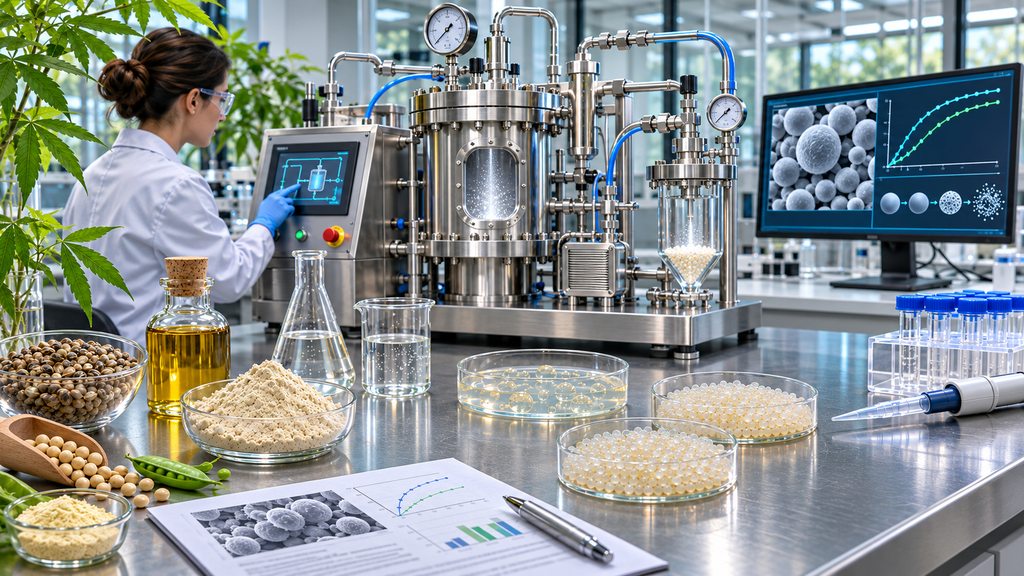
Supercritical CO2 Technology Creates Microscopic Capsules
The study used a process called solution-enhanced dispersion by supercritical fluids, or SEDS. Supercritical carbon dioxide is carbon dioxide maintained under pressure and temperature conditions where it displays properties associated with both gases and liquids.
Under carefully controlled conditions, this technology can help produce microscopic particles without relying on the high temperatures used in some conventional processing methods. The researchers employed a water-based SEDS approach designed to avoid conventional organic solvents in the encapsulation process [1].
This is particularly relevant when working with oils vulnerable to heat and oxidation. The resulting hemp protein and alginate microcapsules were dense and measured less than 8 micrometers. For perspective, one micrometer is one-thousandth of a millimeter.
These were microscopic delivery structures, not nanoparticles. That’s an important distinction when discussing advanced delivery technologies. The researchers attributed the compact structures partly to electrostatic interactions between the materials and the surface characteristics of hemp protein.
These interactions help influence how effectively a capsule forms, how well it holds its contents, and how the resulting material behaves under different conditions.
Hemp Versus Whey: What the Researchers Found
The comparison between hemp and whey produced several meaningful results. Whey protein and alginate capsules demonstrated greater flowability and achieved approximately 95% encapsulation efficiency. This matters for commercial processing because powders that flow consistently are easier to handle, measure, and manufacture.
However, both systems achieved oil retention exceeding 90%, demonstrating that hemp protein could also provide substantial protection for the encapsulated material [1]. The hemp protein formulation showed other advantages.
Researchers reported an ABTS radical-scavenging result of approximately 93%, reflecting strong antioxidant activity under the conditions of that laboratory assay. That doesn’t mean the capsules prevented 93% of oxidation inside the human body. ABTS is a chemical test used to assess antioxidant capacity, not a clinical measurement.
Nevertheless, the finding suggests that hemp protein may contribute protective functionality beyond simply forming a physical barrier around the oil. The hemp capsules also demonstrated greater structural stability under high ionic strength conditions, where the whey-based system showed erosion.
This matters because ingredients can encounter changing salt concentrations, acidity, and other chemical conditions during manufacturing and digestion. A delivery material that maintains its structure under those conditions may be valuable for certain nutritional applications.
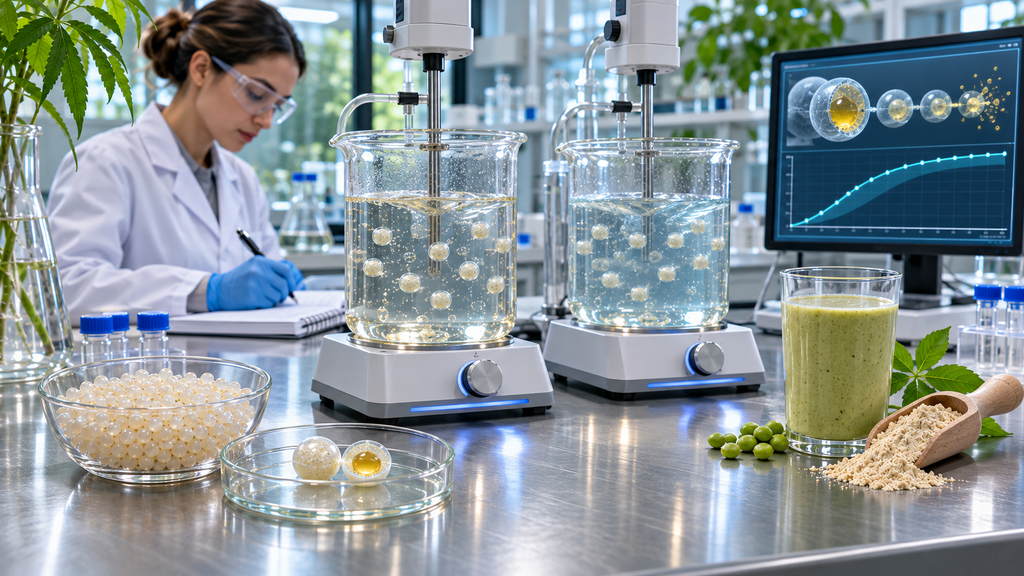
What Happened During Simulated Digestion?
One of the study’s most interesting findings came from experiments designed to simulate gastrointestinal digestion. The hemp protein and alginate capsules maintained substantial structural integrity under simulated gastric conditions, retaining more than 72% of their encapsulated oil [1].
That’s significant because gastric stability can influence when and where a delivery system releases its contents. A capsule that breaks down rapidly in the stomach behaves differently from one that maintains its structure until it encounters later digestive conditions.
For certain nutritional ingredients, controlling release may help protect sensitive compounds from degradation before they reach their intended release site. However, the study didn’t establish that hemp capsules increased nutrient absorption in humans.
The digestion experiments were conducted under laboratory conditions, and researchers didn’t measure human blood concentrations, clinical outcomes, or long-term nutritional benefits. We also shouldn’t assume that greater gastric retention automatically translates into better intestinal absorption.
Those questions require additional experiments examining digestion, release, bioaccessibility, and ultimately human bioavailability. Still, demonstrating that hemp protein can influence the release behavior of an encapsulated oil is an important step forward.
Why This Research Matters Beyond CBD
One of the biggest misconceptions surrounding Industrial Hemp is that its value depends primarily on cannabinoid production. This investigation demonstrates something very different. Hemp seed oil is primarily a source of nutritional lipids, while hemp seed proteins provide their own nutritional and technological properties.
Unlike cannabinoid-rich floral material, hemp seeds don’t serve as major sites of cannabinoid biosynthesis. Cannabinoids detected in seed-derived ingredients may result partly from contact with other plant tissues during harvesting and processing [2].
The new study didn’t investigate CBD, THC, CBG, or cannabinoid receptor activity. Its findings concern hemp seed proteins, fatty acids, microencapsulation, and formulation stability.
That distinction matters because it creates an entirely different opportunity for Industrial Hemp. The implications may extend to functional foods, nutritional powders, specialty oils, and other formulations requiring protection of sensitive lipid ingredients.
Hemp protein could potentially become part of a broader collection of plant-derived carrier materials, reducing reliance on animal-based proteins in appropriate applications. However, commercial-scale performance, ingredient consistency, shelf life, manufacturing economics, and regulatory requirements will need further evaluation.
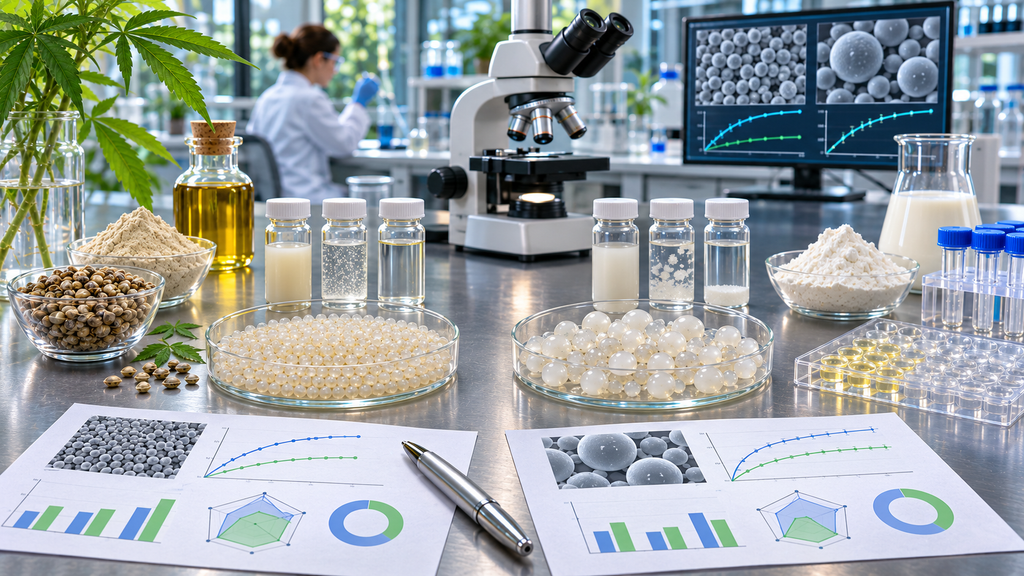
GCRC Perspective: Understanding the Whole Plant Creates New Opportunities
What interests me most about this research is how much scientific potential remains within Industrial Hemp beyond its cannabinoid content. We’ve spent years examining compounds extracted from plant flowers, but there’s an entirely different conversation taking place around hemp proteins, seed oils, fibers, and the technologies they can support.
This study demonstrates that hemp protein isn’t simply something to add to a nutritional shake. Under the right conditions, it can become a functional material that forms microscopic structures to protect sensitive oils.
When researchers use hemp protein to encapsulate hemp seed oil, they’re exploring ways to get more value from the same agricultural resource while developing new formulation approaches.
That doesn’t make hemp protein superior to every existing delivery material, and it certainly doesn’t establish medical effectiveness. What it does establish is that hemp deserves serious investigation as a source of functional ingredients and formulation materials.
For Global Cannabinoid Research Center, this fits an important part of our mission. Understanding plant medicine means recognizing the value of the entire plant, not limiting scientific exploration to cannabinoids alone.
Industrial Hemp can supply valuable nutritional compounds while potentially providing the materials needed to protect and deliver them. That’s the direction I want to see more research take, where agricultural science, nutritional chemistry, and delivery technology come together.
The future of Industrial Hemp won’t be defined solely by how much CBD a plant can produce. It may also be shaped by how effectively we learn to use its proteins, oils, and other natural components.
This research gives us another reason to look at the whole plant.
Mike Robinson
Global Cannabinoid Research Center
References
[1] Gholivand, S., Tan, T. B., Tang, P., Fu, M., Mohamed Nawawi, N. I., Han, Y., Ijod, G., Wang, Y., Meor Hussin, A. S., & Tan, C. P. (2026). “Development of a homologous plant-based delivery system via SEDS: Comparative physicochemical and release characterization of hemp vs. whey protein microcapsules.” Food Chemistry, 533, 151938. Published online 11/03/2026.
DOI: https://doi.org/10.1016/j.foodchem.2026.151938
[2] Burton, R. A., Andres, M., Cole, M., Cowley, J. M., & Augustin, M. A. (2022). “Industrial hemp seed: from the field to value-added food ingredients.” Journal of Cannabis Research, 4, 45. DOI: https://doi.org/10.1186/s42238-022-00156-7
This article is educational commentary from GCRC. It is not a report of study findings and is not medical advice. Speak with a qualified healthcare professional about your own health.
