Topical Administration of Cannabidiol: Research Continues
Last week the Department of Pharmaceutical Science at University of Milan published an intensive research paper on the advancements of topical transdermal applications of cannabinoid medicine -...
 Mike Robinson
7 min read
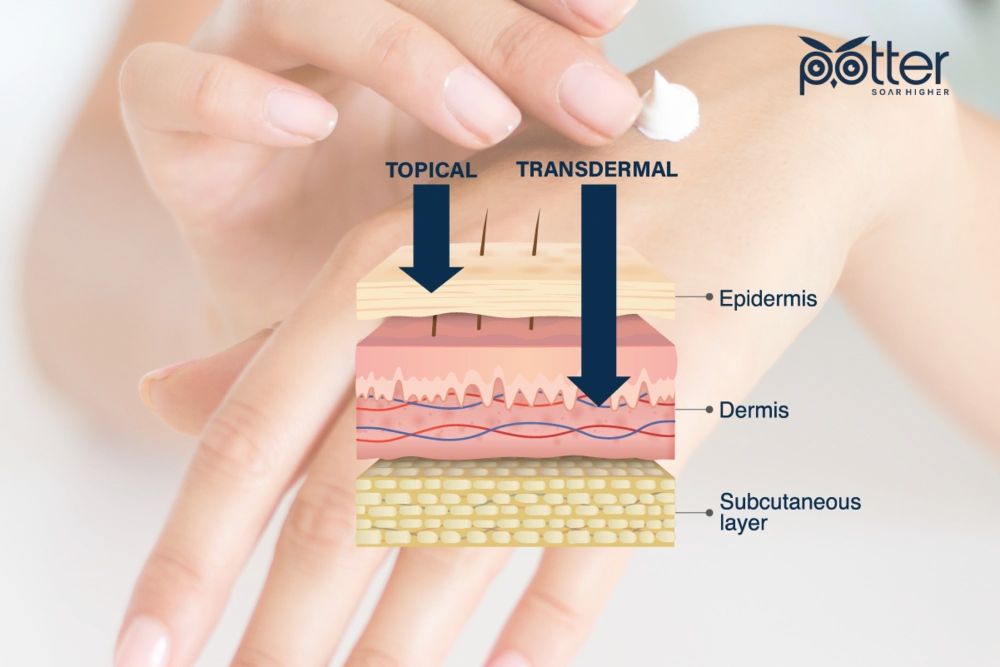
Last week the Department of Pharmaceutical Science at University of Milan published an intensive research paper on the advancements of topical transdermal applications of cannabinoid medicine – namely Cannabidiol. Transdermal applications have various advantages and are utilized in our own R&D at the GCRC. In reviewing the recent article done in Italy we note that the researchers are looking at what vehicle is best suited to deliver the cannabinoid through the epidermis in this regard.
The skin barrier function has been attributed to the stratum corneum and represents a major challenge in clinical practice pertaining to cutaneous administration (via epidermis) of drugs. Despite the known obstacles in this, a large number of bioactive compounds have been successfully administered via cutaneous administration because of advances in the design of topical and transdermal formulations – and this is exactly what the University is researching.
"Among tested vehicle solutions, the propylene glycol/water mixture (80/20, v/v) achieved the best performance both in terms of permeation rate and skin retention." stated the researchers. When it comes to transdermal applications there's much more to consider than putting a substance on a patch and wearing it adhesively to the skin. There's 'uptake studies' that will tell how well a certain delivery method worked within the world of transdermal medicine. Recent advances in research on skin absorption of drugs and the effect of skin absorption enhancers such as this allow for a greater 'uptake' of the medicine into the bloodstream that's being administered in this fashion.
It appears the Italian researchers came to conclusive findings, "The transformation of the solution into hydrophilic gel did not affect the performance in terms of permeation rate but led to a significant reduction of the amount of CBD retained in the SCE. However, the hydrophilic gel proved to be the most effective vehicle among the proposed formulations. Paraffin oil and lipophilic ointment also proved to be suitable vehicles for the administration of CBD, guaranteeing a significant permeation performance. Despite lower dosing and unfavorable thermodynamic conditions, the (trans)dermal patch provided a comparable performance in terms of skin retention."
Topical Administration of Cannabidiol: Influence of Vehicle-Related Aspects on Skin Permeation Process
Umberto M. Musazzi , Giorgio Centin, Silvia Franzè and Paola Minghetti Department of Pharmaceutical Sciences, Università degli Studi di Milano, via Mangiagalli 25, 20133 Milan, Italy; umberto.musazzi@unimi.it (U.M.M.); giorgio.centin@studenti.unimi.it (G.C.); silvia.franze@unimi.it (S.F.); paola.minghetti@unimi.it (P.M.) * Correspondence: antonella.casiraghi@unimi.it Received: 23 September 2020; Accepted: 21 October 2020; Published: 23 October 2020
Abstract:
Cannabidiol (CBD) is a non-psychoactive cannabinoid isolated from Cannabis sativa which, given its claimed beneficial properties and therapeutic potential, has lately aroused considerable attention from the scientific community. Starting from the little literature evidence, the main purpose of this study was to investigate the topical administration of CBD, with particular focus on the influence of vehicle-related aspects on the skin permeation process.
This could provide useful information for the design of suitable drug delivery systems which could be used in developing topical medicines and cosmetics. In vitro human skin permeation studies were conducted using modified Franz diffusion cells to compare the performance of four solutions and two semisolid formulations. The Hildebrand solubility parameter was used to better understand the thermodynamic aspects implied in the partitioning process of the cannabinoid compound into the skin. It was interestingly found that a hydrophilic gel, mostly consisting of propylene glycol (79%, w/w), can be an optimal choice for the topical administration of CBD. Moreover, the feasibility of the preparation of CBD-loaded (trans)dermal patches, made with new printing technology, was also demonstrated. Keywords: cannabidiol; topical administration; in vitro permeation; human skin; solutions; semisolid dosage forms; (trans)dermal patch; Hildebrand solubility parameter
1. Introduction
Cannabidiol (CBD), a non-psychoactive cannabinoid isolated from the Cannabis sativa plant, has attracted great attention due to several beneficial effects reported in the literature. CBD has been investigated for the treatment of several neuropsychiatric disorders, and non-communicable diseases [1–3]. Several studies on different animal models and some clinical trials have been conducted [1–3]. In 2019, the European Medicines Agency (EMA) approved the first CBD-based orphan medicine, Epidyolex® (GW Pharma International B.V., Amersfoort, the Netherlands): an oral solution (100 mg/mL) indicated for use as adjunctive therapy of seizures associated with Lennox-Gastaut and Dravet syndromes [4]. Starting from that, several oral formulations have been developed for therapeutic purposes [2]. However, low bioavailability of CBD (13–19%) was observed after gastrointestinal intake due to its very-limited water solubility in gastrointestinal fluids and the important first-pass metabolism [5]. On the contrary, the (trans)dermal administration of CBD is advantageous in terms of pharmacokinetics in comparison to the gastroenteric one [2]. Indeed, significant plasma concentrations of CBD were observed in animal models after the transdermal gel application [6–8].
Moreover, starting from the discovery of novel biological and pharmacological properties, topical CBD has been proposed for several skin-related therapeutic indications [2,3]. Based on its ability to modulate the skin inflammatory response, CBD efficacy in the treatment of several dermatological conditions, including psoriasis, atopic dermatitis, and acne, has been investigated in vivo [2,3,9]. In an early clinical study on 20 volunteers suffering from various skin diseases, Palmieri et al. observed that a three-month treatment with a CBD ointment improved patients’ clinical outcomes and quality of life by providing an anti-proliferative and anti-inflammatory action [10]. Moreover, the discovery that CBD acts synergistically with bacitracin against Staphylococcus aureus and other Gram-positive bacteria [11] opened novel frontiers in the treatments of cutaneous infections, benefiting from both its antimicrobial and anti-inflammatory activity [12]. Taking into account the scientific and commercial interest in possible CBD topical applications, several liquids (e.g., oil, spray) and semisolid formulations (e.g., creams, gels, patches) have been developed and patented [2]. Many of them have been developed to be marketed as medicinal products [2,3] or as cosmetics. Indeed, several skincare products have also been placed on the market, relying on CBD claimed anti-seborrheic, anti-aging, antioxidant, and skin-protective properties [13,14]. Despite this, a limited number of in vitro and in vivo studies aimed to investigate the impact of the vehicle on the CBD permeation profile through models of human skin have been available in the literature [15]. In order to reach the therapeutic target, a molecule has to permeate through the stratum corneum (SC) and distribute through the underlying layers of the epidermis. In this context, the vehicle significantly influences the partitioning process of a molecule based on its physicochemical characteristics [16].
This study aimed to investigate the influence of vehicle-related aspects on CBD percutaneous absorption. Four different solvent systems and two semisolid formulations, namely an ointment and a hydrophilic gel, were compared in terms of drug permeation and retention in the human epidermis. Taking into consideration the potential systemic use of CBD by transdermal administration, a (trans)dermal patch was also prepared by an innovative printing technique [17]. Particular attention was given to formulation aspects related to solubility and thermodynamic activity of the permeant. For this purpose, the Hildebrand solubility parameter [18] was determined for each placebo vehicle to estimate the thermodynamic activity of the cannabinoid compound. 2.
Results
Table 1 summarizes the results of solubility and skin permeation tests. Four different solvent systems were considered, two of lipophilic nature: liquid paraffin (S1), virgin olive oil (S2); and two of hydrophilic nature, namely propylene glycol 80% (S3), polyethylene glycol (PEG) 400 80% (S4). Among the above, S1 and S3 showed a significantly better performance than the other two solutions in terms of CBD permeation rate (p < 0.005), and thus they can be considered the most appropriate solvent systems for cutaneous administration of CBD. While the performance of S1 and S3 was similar in terms of steady-state flux (J) and the cumulative permeated amount at 24 h (Qp,24), the propylene glycol solution provided a significantly higher retained amount at 24 h (Qr,24) of CBD (p < 0.001). It is also noteworthy that S1 and S3 were the vehicles in which CBD was less soluble.
Read the entire research article here.
Mike Robinson, Founder, Global Cannabinoid Research Center
This article is educational commentary from GCRC. It is not a report of study findings and is not medical advice. Speak with a qualified healthcare professional about your own health.