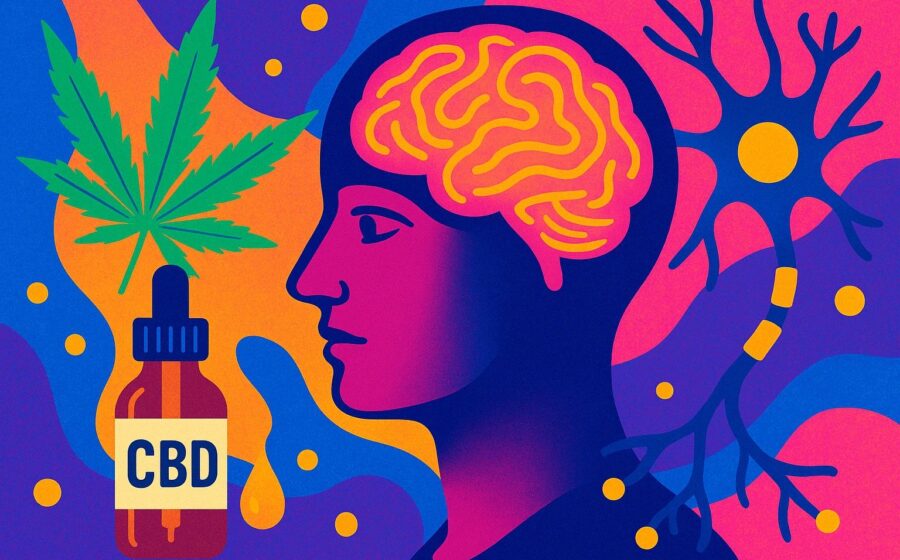
New Research: Fentanyl Overdoses Reduced By CB2 Activation in ECS
With the Opioid Epidemic still running rampant through the pandemic of 2020 with no end in sight as far as Fentanyl overdose deaths - the research published only 10 days ago is beyond welcome. The...
 Mike Robinson
4 min read

With the Opioid Epidemic still running rampant through the pandemic of 2020 with no end in sight as far as Fentanyl overdose deaths – the research published only 10 days ago is beyond welcome. The University of Indiana engaged in a collaborative effort among various research divisions in digging deep into how activation of the CB2 receptor in the Endocannabinoid System actually attenuates or can reduce/stop a Fentanyl overdose death. This finding is groundbreaking and life saving – and will allow for investigative medicines to pave the way into the next decade of battle against ongoing death by pharmaceutical and illicit drug use.
The researchers concentrated on respiratory depression which is the number one cause of death in an opioid overdose – with Fentanyl the onset of full blown respiratory arrest is so speedy and dangerous it can occur before an illicit user even finished administering the drug. Their findings that a CB2 agonist given with strong drugs like Fentanyl can allow for the body to process them without depressing respirations are worthy of expansion into further research study – CBD itself is an inverse agonist of the receptors GPR3, GPR6, and GPR12. Moreover, Cannabidiol antagonizes the action of CB1 and CB2 receptors agonists. Other minor cannabinoids that are powerful such as CBGa, CBC, CBL, and others have the same abilities. The promising future could bear a cannabinoid/opioid combination in pain management that does not have the high possibility or probability of causing overdose and/or death.
Cannabinoid CB2 Receptor Activation Attenuates Fentanyl-Induced Respiratory Depression
Carmen A. Zavala , Ana C. Thomaz, Vishakh Iyer, Ken Mackie, and Andrea G. Hohmann
Department of Psychological and Brain Sciences, Indiana University, Bloomington, Indiana, USA. Genome, Cell, and Developmental Biology Program, Indiana University, Bloomington, Indiana, USA. Program in Neuroscience, Indiana University, Bloomington, Indiana, USA.
Published Online: 21 Oct 2020https://doi.org/10.1089/can.2020.0059
Abstract
Introduction: Overdose fatalities associated with the opioid epidemic are predictably attributable to drug-induced respiratory depression. In terms of illicit opioid abuse, fentanyl is the synthetic opioid responsible for the largest number of overdose deaths. There is, therefore, an urgent need to identify safe and effective therapeutics that can attenuate fentanyl-induced respiratory depression. Identification of effective alternate analgesic strategies that lessen the respiratory depression associated with narcotics would also help improve current strategies for pain management. Our laboratory recently reported that the G protein-biased CB2 cannabinoid receptor agonist LY2828360 suppressed chemotherapy-induced neuropathic nociception and attenuated both morphine tolerance and physical dependence in paclitaxel-treated mice. However, the impact of LY2828360 on other undesirable side effects of opioids, such as opioid-induced respiratory depression, remains unknown.
Materials and Methods: We used whole-body plethysmography to assess the impact of the CB2 cannabinoid agonist LY2828360 on fentanyl-induced respiratory depression using wild-type (WT) and CB2 knockout (CB2KO) mice.
Results: Fentanyl reduced minute ventilation and respiratory frequency without altering tidal volume in both WT and CB2KO mice. In WT mice, the high dose of fentanyl (0.2 mg/kg intraperitoneal [i.p.]) produced a greater suppression of respiratory parameters compared with the low dose of fentanyl (0.1 mg/kg i.p.). Coadministration of a behaviorally active dose of LY2828360 (3 mg/kg i.p.) with fentanyl (0.2 mg/kg i.p.) attenuated fentanyl-induced respiratory depression in WT mice. Notably, LY2828360 (3 mg/kg i.p.) did not attenuate fentanyl-induced respiratory depression in CB2KO mice, consistent with mediation by CB2 receptors. Moreover, LY2828360 (3 mg/kg i.p.) alone lacked intrinsic effects on respiratory parameters in either WT or CB2KO mice.
Conclusion: The combination of a CB2 agonist with fentanyl may represent a safer adjunctive therapeutic strategy compared with a narcotic analgesic alone by attenuating the development of opioid-induced respiratory depression. Moreover, the CB2 agonist, administered alone, did not alter respiration. Our findings suggest that the CB2 cannabinoid agonist LY2828360 may provide CB2-mediated protection against fentanyl-induced respiratory depression, a detrimental and unwanted side effect of opioid use and abuse.
–Mike Robinson, Founder – Global Cannabinoid Research Center / GCRC Publications
This article is educational commentary from GCRC. It is not a report of study findings and is not medical advice. Speak with a qualified healthcare professional about your own health.