Cannabinergic Pain Medicine: A Concise Clinical Primer and Survey
Cannabinergic Pain Medicine: A Concise Clinical Primer and Survey of Randomized-controlled Trial Results By: Sunil K. Aggarwal, MD, PhD
 Mike Robinson
4 min read
Cannabinergic Pain Medicine: A Concise Clinical Primer and Survey of Randomized-controlled Trial Results By: Sunil K. Aggarwal, MD, PhD
Read the full publication here on Academia.edu
Objectives:
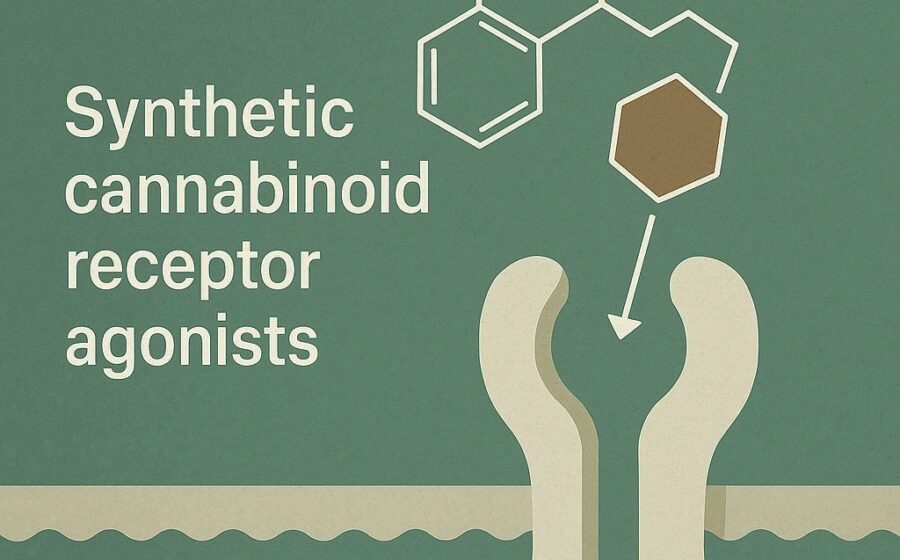
This article attempts to cover pragmatic clinical considerations involved in the use of cannabinergic medicines in pain practice, including geographical and historical considerations,pharmacokinetics, pharmacodynamics, adverse effects, drug inter-actions, indications, and contraindications. Topics include molecular considerations such as the 10-fold greater abundance of cannabinoid type 1 receptors compared to m-opioid receptors in the central nervous system and anatomic distributions of cannabinoid receptors in pain circuits.
Methods:
The article uses a narrative review methodology drawing from authoritative textbooks and journals of cannabinoid medi-cine, Food and Drug Administration-approved cannabinoid drug labels, and current and historical pain medicine literature to ad-dress core clinical considerations. To survey the current evidence base for pain management with cannabinergic medicines, a targeted PubMed search was performed to survey the percentage of positive and negative published randomized-controlled trial (RCT)results with this class of pain medicines, using appropriate search limit parameters and the keyword search string “cannabinoid OR cannabis-based AND pain.”
CONCLUSIONS
The positive clinical evidence base for cannabinergicpain medicine is explained by extrapolating from an un-derstanding of the properties and mechanism of action of these drugs derived from extensive basic science research.Cannabinoids have been shown to inhibit pain in “virtuallyevery experimental pain paradigm” in supraspinal, spinal,and peripheral regions.37
That cannabinergic therapeuticsare of great interest in the field of pain medicine currentlyis evidenced in large part by the numerous review articlesthat have been published recently on this topic in painand therapeutics journals and the recent convening of a“Cannabinoids and Pain”Satellite Symposium of the 13thWorld Congress on Pain held in Montreal, Canada in July2010.The limitations of this review article are that it did notexhaustively cover the cannabinoids and pain literature orall clinical details such as those regarding cannabinoiddosing, nor did it address the ongoing controversies re-garding the implementation of medical marijuana programsin the United States or the necessary policy debates in-volved in the rescheduling of cannabis for general pre-scription use as an FDA-unapproved drug. In addition, thefocused PubMed search was only targeted at determiningthe percentage of RCTs indexed in the National Library of Medicine showing efficacy for cannabinergic medicationsfor pain and did not fully evaluate the pros and cons of each study. Nevertheless, by focusing on practical clinicalconsiderations and drawing on established literature, in-cluding published systematic reviews and meta-analyses,attempts were made to compensate for these limitations.The implications of this study are that, with proper clinicaleducation, the use of cannabinergic medicines could be-come one more needed tool in the pain physician’s toolbox,with further research, clinical experience, and empirictreatment trials needed to better develop, improve, andexpand these therapies.
ACKNOWLEDGMENTS
The author would like to thank his pain medicine mentors.
REFERENCES
1. Russo EB. The role of cannabis and cannabinoids in painmanagement. In: Weiner RS, ed.
Pain Management: APractical Guide for Clinicians
. 6th ed. Boca Raton, FL:CRC Press; 2002:357–375.2. Russo EB. History of cannabis and its preparations in saga,science, and sobriquet.
Chem Biodivers
. 2007;4:1614–1648.3. O’Shaughnessy WB. On the preparations of the Indian hemp,or gunjah (
Cannabis indica
); their effects on the animal systemin health, and their utility in the treatment of tetanus andother convulsive diseases.
Transactions of the Medical and Physical Society of Bengal
1838–1840; 71–102, 421–461.Available at:http://www.mikuriya.com/s1_1.pdf .4. Mikuriya TH.
Marijuana: Medical Papers 1839–1972
. Oak-land, CA: Medi-Comp Press; 1973.5. Osler W.
The Principles and Practice of Medicine: Designed for the Use of Practitioners and Students of Medicine
. NewYork, NY: D. Appleton and Co.; 1892:959.6. Hare HA. Clinical and physiological notes on the action of cannabis indica.
Therap Gaz
. 1887;11:225–228.7. Musto DF.
The American Disease: Origins of NarcoticControl First Published in 1973
. New York, NY: OxfordUniversity Press; 1999.8. Helmer J.
Drugs and Minority Oppression
. New York, NY:Seabury Press; 1975.9. Lupien JC.
Unraveling an American Dilemma: The Demon-ization Of Marihuana
. Master’s Thesis. Faculty of theDivision of Humanities, Pepperdine University, 1995.10. White W. Themes in chemical prohibition. In: William E.Link, et al, ed.
Drugs in Perspective
. Rockville, MD: NationalDrug Abuse Center/National Institute on Drug Abuse;1979:117–182.11. Mikuriya TH, Aldrich MR. Cannabis 1988: old drug, newdangers: the potency question.
J Psychoactive Drugs
. 1988;20:47–55.12. Aggarwal SK. Cannabis: a commonwealth medicinal plant,long suppressed, now at risk of monopolization. 87 Denv. U.L. Rev. Online 2010. Available at:http://www.denverlawreview.org/medical-marijuana/Accessed February 14, 2012.13. “V.A. Easing Rules for Users of Medical Marijuana.” NewYork Times, July 24, 2010, p A1. Available at:http://www.nytimes.com/2010/07/24/health/policy/24veterans.html.Accessed February 14, 2012.14. “U.S. Won’t Prosecute in States That Allow MedicalMarijuana.” New York Times, October 20, 2009, p A1.Aggarwal Clin J Pain Volume 29, Number 2, February 2013168|www.clinicalpain.com r 2013 Lippincott Williams & Wilkins
This article is educational commentary from GCRC. It is not a report of study findings and is not medical advice. Speak with a qualified healthcare professional about your own health.