Yale Gains FDA Approval: 1st Cannabis Clinical Trial Of It’s Kind
A Portland company, CT Pharma, that supplies cannabis products to dispensaries under that state's medical marijuana program, has announced recently it's collaboration with researchers at Yale on a...
 Mike Robinson
5 min read
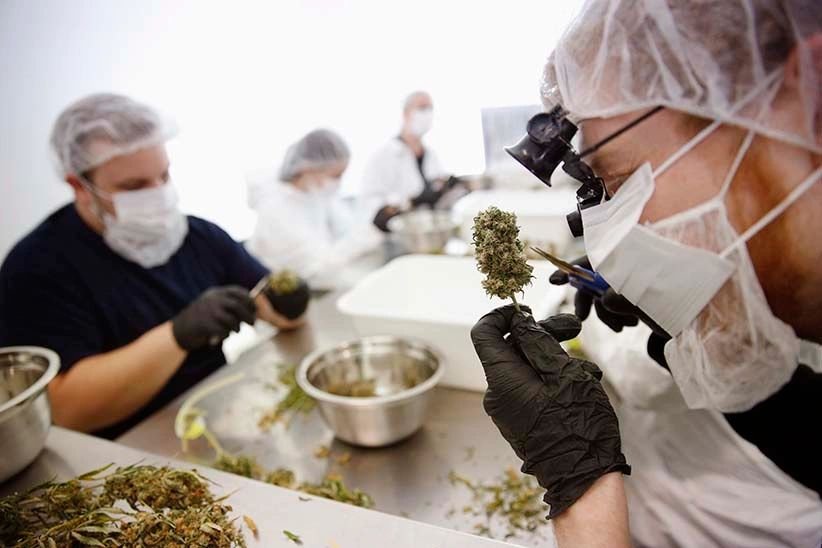
A Portland company, CT Pharma, that supplies cannabis products to dispensaries under that state's medical marijuana program, has announced recently it's collaboration with researchers at Yale on a federally approved study of cannabinoids for treatment of of pain and stress – specifically THC and CBD in tablet form. Combing through the various clinical trials of the past and present, this appears to be the first ever done using a U.S. Cannabis Industry sourced product. All past clinical trials on cannabinoid medicine have used National Institute on Drug Research (NIDA) provided cannabis in prior very limited study. Since the era of prohibition and then the Controlled Substances Act of 1970, that entity has been the only legal supplier of cannabis for the entire U.S. research industry – which has had it's limitations due to prohibition and the very quality of the Government grown cannabis.
The University of Mississippi has been the focus of what were once called the government pot farms – with legalization and evolution of the cannabis movement and industries it's no longer referred to as pot, weed, or marijuana in the professional sense – now it's cannabis. Since NIDA grown cannabis can't be used for commercial purposes it also means it can't be used in phase III clinical trials which is the last step before the FDA approves any new medicine as the drug used in that last phase must be an exact replication of the drug that will be sold. This has created a scenario in which research could be done using the government grown ganja but there was no way for researchers to make it through the type of trials necessary to get cannabinoid medicine – namely those that include THC – through the rigorous requirements and laws that surround conducting clinical trials – or any research on humans.
The Drug Enforcement Administration (DEA), which for years has refused to license additional suppliers of medicinal marijuana, changed its mind in 2016, the last year of the Obama administration – when at that time announced it would start accepting applications from potential future growers – but it never happened. As of this summer, 2019, a total of 33 applications have been received by the DEA yet not one has been granted these licenses to provide the government with more up to date strains and more. In essence the promise to allow U.S. growers to supply the government with cannabis for research was empty – and up until this announcement there's been no availability to study without using the government model of cannabis – but that just changed.
CTPharma is not a DEA federally licensed entity, its entire operation like that of every other state-licensed marijuana supplier, remains illegal under the federal Controlled Substances Act. Due to this it's came as a shock that Yale researchers were allowed by the FDA to use CTPharma's tablets containing cannabis derived CBD and THC in a Phase I clinical trial. "All the formulations are in tablet," says CTPharma COO Rino Farrarese. "The FDA wanted very specific formulations."
The Yale Stress Center will house the study, which is part of the medical school at Yale. At first the DEA would not let a pharmacist at Yale dispense the tablets but withdrew its objections after the researchers proposed a different plan: The subjects will pick up their tablets at a local dispensary and then bring them to Yale for the study. Stage 1 of the study involves recreational cannabis users who didn't quite qualify for a medicinal cannabis recommendation from a doctor. They'll be randomly assigned to receive either placebos or various doses of CBD, at times in combination with THC and this will last for six weeks. The second stage involves people with chronic pain. The researchers will record subjective drug effects, stress and pain ratings, heart rate, blood pressure, and blood levels of CBD, THC, and their metabolites.
Depending on findings, the researchers may decide to include subjects with other conditions, specifically those with PTSD. "With increasing levels of use of medical marijuana products in the U.S. today," lead researcher Rajita Sinha, a Yale professor of psychiatry and neurobiology, said "it is imperative that we understand the science of how these products are working to alleviate patient symptoms."
Farrarese noted that "an English company has the only FDA-approved plant-based medical marijuana product in our market": Epidiolex, an oral CBD solution made by GW Pharmaceuticals from cannabis the company grows in the U.K. Last year it gained FDA approval as a treatment for two rare forms of epilepsy. CTPharma hopes to follow in the British company's footsteps, although the process may take anywhere from three to seven years." .
Meanwhile, CTPharma seems to have accomplished a first of its own. Farrarese says he is not aware of any other FDA-approved study using marijuana produced in the United States that does not come from NIDA. "I'm pretty sure it's the first one," he says.
———————————
We'll wait with excitement to see more U.S. Grown Cannabis, and not by our government, used in clinical trials that will give us all intensive science based evidence on how the plant works. Many are aware of the wonders of the cannabis plant and how it's changed the lives of millions – but gaining the knowledge of how is imperative.
Mike Robinson, Founder, GCRC
This article is educational commentary from GCRC. It is not a report of study findings and is not medical advice. Speak with a qualified healthcare professional about your own health.