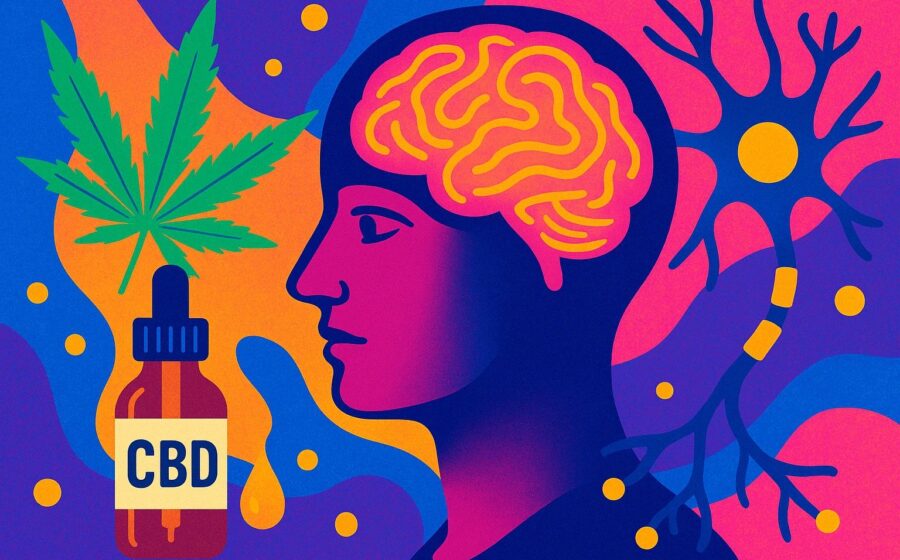
The Crucial Role of Endocannabinoids in Spatial Navigation
This comprehensive review delves into how endocannabinoids modulate our brains GPS, recently released in a groundbreaking study published in the Journal of Science in late February 2024. Affiliated...
 admin
6 min read

This comprehensive review delves into how endocannabinoids modulate our brains GPS, recently released in a groundbreaking study published in the Journal of Science in late February 2024. Affiliated with world-renowned institutions such as Baylor College of Medicine, Stanford University, Boston Children's Hospital, Harvard Medical School, Peking University, and Howard Hughes Medical Institute, this study significantly advances our understanding of neural navigation mechanisms.
What are Neural navigation mechanisms?
Neural navigation mechanisms refer to the brain's figuring out where we are, where we're going, and how to get from one place to another. Think of it as the brain's internal GPS system. This system involves special cells in the brain, mainly located in the hippocampus, that help us create and use mental maps of our surroundings.
When we move around in an environment, whether navigating through a city or just walking around our house, specific neurons (brain cells) called "place cells" become active in specific locations. These cells help the brain understand and remember where things are. For instance, a place cell might become active only in the kitchen, allowing the brain to recognize that we're in that specific part of the house.
Additionally, other cells are involved, such as "grid cells," which help the brain measure distances and keep track of direction, adding more details to the brain's internal map. Together, these cells and mechanisms allow us to understand our position in space, remember the layout of the environments we navigate, and find our way around familiar and new places.

What is Retrograde endocannabinoid signaling?
Retrograde endocannabinoid signaling is a fascinating process in the brain that essentially works like a feedback loop for communication between neurons, the cells that transmit information. Unlike the more common way neurons talk to each other (where signals move from the "sending" neuron to the "receiving" neuron), retrograde signaling goes in the opposite direction.
Let's break it down:
In Normal Neuron Communications: Normally, one neuron sends a signal across a tiny gap called a synapse to another neuron. This signal is usually in the form of neurotransmitters, chemical messengers that cross the synapse and bind to receptors on the receiving neuron, influencing its activity.
Endocannabinoids: Endocannabinoids (eCBs) are molecules produced by neurons. They're similar to the cannabinoids found in cannabis, but our bodies make them naturally. They regulate mood, memory, appetite, pain sensation, and other functions.
Retrograde Signaling: In retrograde endocannabinoid signaling, the signal goes backward. When neurotransmitters activate the "receiving" neuron (usually a postsynaptic neuron), it can produce endocannabinoids in response. These endocannabinoids then travel back across the synapse to the "sending" neuron (usually a presynaptic neuron).
Feedback Loop: Endocannabinoids bind to specific receptors once they reach the sending neuron. This binding can modulate the sending neuron's activity, often by reducing the release of neurotransmitters. This action serves as a feedback mechanism, helping to fine-tune the brain's communication system and ensure it's not too overactive or underactive.
This process is crucial for maintaining the balance and proper function of various neural circuits, influencing learning and memory, stress response, and mood and pain regulation. It's a sophisticated way the brain has developed to regulate itself and adapt to the continuous flow of information.
Introduction to the Study
Humans and animals possess an innate ability to navigate their environments, a skill primarily attributed to the brain's hippocampus region. At the heart of this maritime prowess are place cells, neurons within the hippocampus that activate in specific locations, effectively creating a mental map of the surroundings. This research focuses on a novel aspect of hippocampal function: endocannabinoids (eCBs) and lipid-based neurotransmitters, mediating the communication between place cells during spatial orientation.
Overview of Endocannabinoid Signaling
Endocannabinoids are part of the brain's communication system, which regulates neurotransmitter release across synapses. Their function extends beyond the brain, affecting various bodily processes, from pain sensation to immune response. However, until this groundbreaking research, their role in spatial navigation and memory had remained largely unexplored.

Methodology: Molecular Tools and Live Animal Imaging
The researchers employed cutting-edge molecular tools and live animal imaging techniques to observe eCB signaling in real-time. By utilizing a molecular tool that converts eCB signals into fluorescence and sophisticated microscopy, the team was able to record these signals in mice navigating a treadmill. This approach allowed for unprecedented observation of the rapid and specific signaling of eCBs among hippocampal neurons.
Key Findings: Fast, Specific Signaling of Endocannabinoids
Contrary to the belief that eCB signals are slow and diffuse, the study discovered that eCB signaling is both rapid and highly specific to individual neurons. This specificity is crucial for encoding spatial information, as it ensures that only relevant synaptic connections are modified in response to the animal's movement through its environment. This finding's implications extend to our fundamental understanding of memory and learning, suggesting that eCBs play vital roles in the brain's ability to form accurate and efficient mental maps.
Implications for Neurological Disorders
The study's insights into eCB signaling have significant implications for neurological conditions characterized by cognitive impairment, such as epilepsy. Previous research has shown that epileptic seizures can trigger the release of eCBs, potentially affecting memory and spatial orientation. By elucidating the mechanisms of eCB signaling in healthy brains, this research lays the groundwork for developing new therapeutic strategies aimed at mitigating the cognitive comorbidities associated with epilepsy and other neurological disorders.
GCRC's Conclusion
The study "Retrograde Endocannabinoid Signaling at Inhibitory Synapses in vivo" marks a significant leap forward in understanding neural mechanisms underlying spatial navigation. The research challenges existing paradigms by shedding light on the fast and specific nature of eCB signaling within the hippocampus. It opens new avenues for exploring cognitive functions and addressing neurological disorders.
This work has vast implications, promising new strategies for enhancing cognitive health and treating conditions that impair spatial memory and orientation.
This review has only scratched the surface of the study's rich insights and potential applications. As the scientific community continues to work through the complexities of the brain's navigational systems with knowledge of the ECS, endocannabinoids' role will surely be a focal point of future research. It has the potential to revolutionize our approach to cognitive health and disease.

© Mike Robinson, Founder Global Cannabinoid Researcher Center and Creator of ECS Balance Control, The Researcher OG
References:
The research reviewed:
Barna Dudok et al. Retrograde endocannabinoid signaling at inhibitory synapses in vivo.Science383,967-970(2024).DOI:10.1126/science.adk3863
Anatol C Kreitzer, Wade G Regehr, Retrograde signaling by endocannabinoids, Current Opinion in Neurobiology, Volume 12, Issue 3, 2002, Pages 324-330, ISSN 0959-4388, https://doi.org/10.1016/S0959-4388(02)00328-8. https://www.sciencedirect.com/science/article/pii/S0959438802003288
Rajkumar Rajendram,et al, Chapter 47 – Recommended resources for studying and investigating cannabis use, neurobiology, psychology, and treatments, Neurobiology Academic Press, 2023, Pages 629-634, ISBN 9780323898621, https://doi.org/10.1016/B978-0-323-89862-1.00051-9. https://www.sciencedirect.com/science/article/pii/B9780323898621000519
Arturo Venebra-Muñoz, Sara Mejía-Chávez, Chapter 27 – The role of ΔFosB in the plasticity of the cannabinoid system, Psychology, and Treatment, Academic Press 2023, Pages 377-381, ISBN 9780323898621, https://doi.org/10.1016/B978-0-323-89862-1.00019-2. https://www.sciencedirect.com/science/article/pii/B9780323898621000192
This article is educational commentary from GCRC. It is not a report of study findings and is not medical advice. Speak with a qualified healthcare professional about your own health.