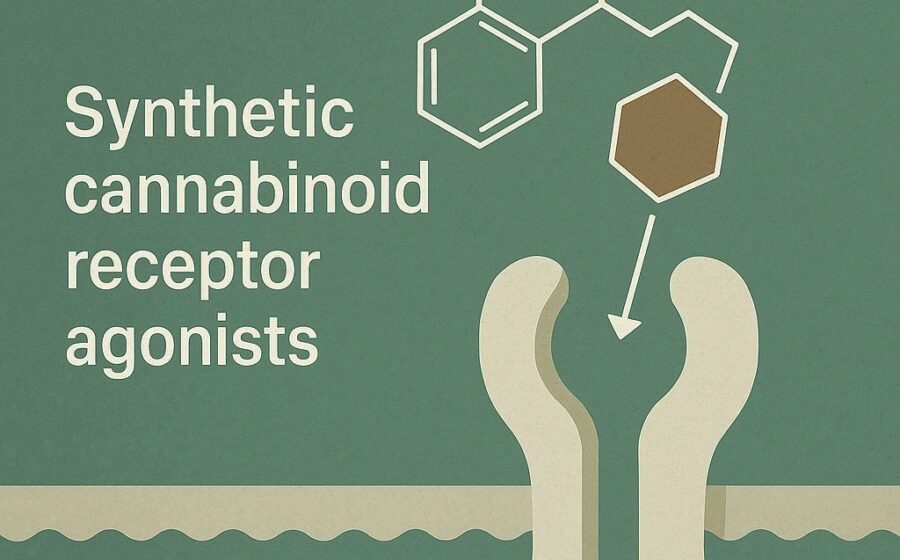
Research Shows Cannabinoids Cause Weight Loss
A Journal of Epidemiology published study from March 2019 by Michigan State University highlights an interesting finding in regards to cannabinoids and the loss of weight. “Contrary to the belief...
 Mike Robinson
6 min read
A Journal of Epidemiology published study from March 2019 by Michigan State University highlights an interesting finding in regards to cannabinoids and the loss of weight. “Contrary to the belief that marijuana users who have a serious case of the munchies will ultimately gain more weight, those who smoke cannabis, or marijuana, weigh less compared to adults who don’t,” Michigan State University noted.
Long term cannabis users are less likely to be obese:
Another study published in 2011 evaluated the presence of obesity among adults over age 18. The research findings showed that “of the 50,736 eligible respondents from the U.S., the prevalence of obesity was significantly lower in cannabis users than in non users.” Another research study published in 2010 collected data from 2,566 adults over the age of 21. Once again, findings highlighted lowered obesity among adult cannabis users. Still, “further research is needed to examine the mechanism of this association,” researchers concluded.
“The effects can be varied on individuals,” says Dr. Murdoc Khaleghi, senior medical advisor for a U.S. based manufacturer of CBD products. “Some people admit that cannabis makes them more alert, while others find the effects calming. The big difference lies in the cannabis strains,” Dr. Khaleghi stated. THCV, also known as tetrahydrocannabivarin, is a compound found in cannabis that acts as an suppressant to appetite, unlike THC, that's known to cause an increase. Many are also aware that certain cannabis cultivars are also known to decrease our hunger – namely the strains known as Sativas. Others find that increased metabolism occurs when they use CBD. That's the case for me personally and with many others as Cannabidiol often will suppress appetite. “CBD is not an appetite stimulant; it certainly has less weight gain properties in contrast to THC,” Dr. Khaleghi adds.
There's quite an array of research on this matter that's quite controversial outside of the cannabis communities that are aware of the ability to lose weight via cannabinoid medicine.
Let's review some research that's 100% about this subject:
Role of Cannabinoids in Obesity
Francesca Rossi,* Francesca Punzo, Giuseppina Rosaria Umano, Maura Argenziano, and Emanuele Miraglia Del Giudice 2018 Sep; 19
Abstract:
Obesity is an increasing health problem worldwide. Its related comorbidities imply a high cost for the National Health System and diminish a patient’s life quality. Adipose tissue is composed of three types of cells. White adipocytes are involved in fat storage and secretion of hormones. Brown adipocytes are involved in thermogenesis and caloric expenditure. Beige adipocytes are transitional adipocytes that in response to various stimuli can turn from white to brown and could be protective against the obesity, enhancing energy expenditure. The conversion of white in beige adipose tissue is a potential new therapeutic target for obesity. Cannabinoid receptors (CB) regulate thermogenesis, food intake and inflammation. CB1 ablation or inhibition helps reducing body weight and food intake. Stimulation of CB2 limits inflammation and promotes anti-obesity effects by reducing food intake and weight gain. Its genetic ablation results in adiposity development. CB receptors are also responsible for transforming white adipose tissue towards beige or brown adipocytes, therefore their modulation can be considered potential anti-obesity target. CB1 principal localization in central nervous system represents an important limit. Stimulation of CB2, principally localized on peripheral cells instead, should facilitate the anti-obesity effects without exerting remarkable psychotropic activity.
(Very interesting: To read the entire study go to: https://www.ncbi.nlm.nih.gov/pmc/articles/PMC6163475/ – we're going to cheat a little and skip to the conclusion – both the abstract and conclusion areas of research studies are much more reader friendly)
Conclusions:
Obesity-related co-morbidity implies a high cost for society and reduces a patient’s lifestyle quality [1,77,78,79,80,81]. Since an obese child will likely be an obese adult, planning childhood intervention on obesity would be the most advisable solution. Diet intervention and correct lifestyle are surely the best solution, but dietary regiments are negatively affected by a strong cultural influence, especially in certain areas of the world, therefore it is sometimes not an efficient approach. So far only one treatment has been approved by the FDA for weight loss in children and adolescents (Orlistat), and not without important side effects, such as gastrointestinal discomfort, flatulence, oily stools, fecal urgency, stool incontinence, liposoluble vitamin deficiency, pancreatitis, nephrotoxicity and hepatotoxicity [3]. We invite researchers to investigate new pharmaceutical targets suitable for children and young adults. The recent findings in the field of browning in humans have pointed out the potential role of this phenomenon in obesity treatment. In addition, BAT activity has been associated with an improving of metabolic profile in adults [30], although no large clinical data are available at the time. In light of what has been discussed so far, CB2, thanks to its capacity of enhancing browning and transforming chemical energy into thermic energy, could be a possible solution, rather than targeting CB1 which, as discussed previously, causes psychotropic effects [50]. CB2, instead, could show a higher safety profile with negligible side effects.
————————————————————–
So what does this study tell me? CB1 activity (often is gained at max levels from inhalation of THC) isn't the most opportune way to drop weight although many will use certain strains or cultivars of the cannabis plant that ceases their appetite successfully. Let's face it, science is still emerging on cannabinoid medicine so not everything is concrete.
The CB2, however, is noted to be the Cannabinod receptor that does the trick. The Cannabinoids that are agonist to this are many – including THC (ingested especially) CBN, CBD, CBC, and CBG just to name a few.
The Cannabis Terpene, which is also considered a cannabinoid by many, β-Caryophyllene, is a CB2 receptor agonist that is likely responsible for weight loss in those that inhale cannabinoid medicine in vape cartridges or via smoke with strains that are high in it. A very interesting research paper that outlines this ability of this interesting Terpene addresses it's ability to modulate behavior. When we consider the fact that eating, overeating, and abstinence from ingestion of food are all 'behaviors', this paper has much pertinence.
"β-Caryophyllene, a CB2 receptor agonist produces multiple behavioral changes relevant to anxiety and depression in mice" https://naturalingredient.org/wp/wp-content/uploads/physiology-behavior-135.pdf
Cannabis can play a vital part in weight management – it's all about how you use it and what type you're using. Everyone finds a different solution with the same plant, however it's much easier to come to that finding with a bit of guidance!
Thank you,
Mike Robinson, Founder, Global Cannabinoid Research Center
This article is educational commentary from GCRC. It is not a report of study findings and is not medical advice. Speak with a qualified healthcare professional about your own health.