Prof. Elisaldo Araújo Carlini Cannabis & Cannabinoid Researcher
A research paper was just published in Mary Ann Liebert's Cannabis and Cannabinoid Medicine Journal on the work of the legendary Brazilian researcher Prof Elisaldo Araujo Carlini (1930-2020) who...
 Mike Robinson
2 min read
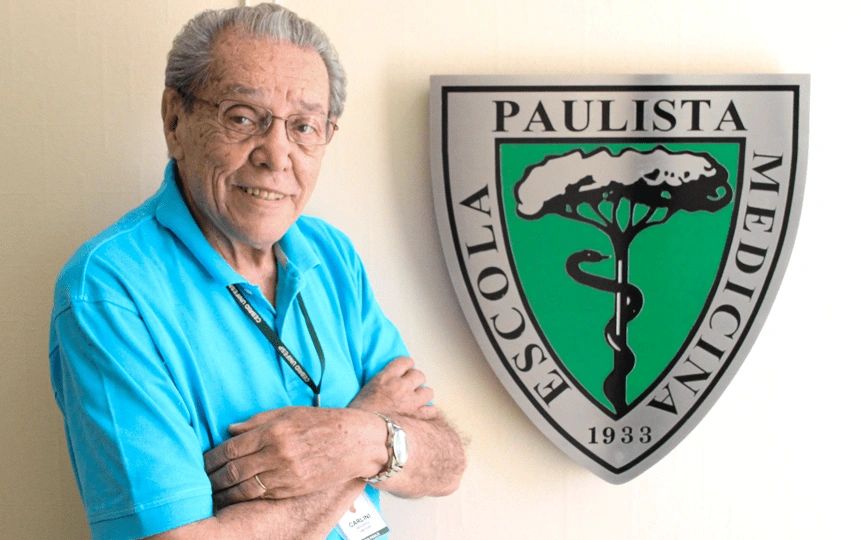
A research paper was just published in Mary Ann Liebert's Cannabis and Cannabinoid Medicine Journal on the work of the legendary Brazilian researcher Prof Elisaldo Araujo Carlini (1930-2020) who passed away in September. The pioneer in discovering anticonvulsant effects of cannabidiol started over 50 years ago. Carlini published his initial papers on cannabinoid medicine at nearly the same time Prof. Raphael Mechoulam's group at Hebrew University was in Israel way back then.
At that time, Mechoulam and Carlini established an extremely productive partnership and a lifetime friendship. A few years later, with his colleague Isaac Karniol, he observed that Brazilian cannabis samples of THC content did not explain all of its biological activities.
This finding highlighted that other cannabinoids might also produce pharmacological effects that, as in the case of cannabidiol (CBD), could be even opposite to those observed with THC.
These studies were fundamental to the subsequent discovery of CBD's anxiolytic and antipsychotic properties. Carlini lived a as a child in the rural district of Pirajá, São Paulo. In this village there were few resources and no health care. He came into contact with hemp and other herbal treatments and started researching.
He had a deep sense of empathy and worked diligently to stop his people from suffering. As a professor he often shared this with students to motivate them to do the same.
For those that would like to view a research paper just published on his works, you can find it here:
Prof. Elisaldo Araújo Carlini, Cannabis and Cannabinoids Research Pioneer (June 9, 1930–September 16, 2020)
May he rest in peace as his contributions heal the nations…
–Mike Robinson, Founder – Global Cannabinoid Research Center / GCRC Publications
This article is educational commentary from GCRC. It is not a report of study findings and is not medical advice. Speak with a qualified healthcare professional about your own health.