New Patent: Suppression of Cytokine Storm With Curcumin Extracts
With the pandemic raging away stopping Cytokine Release and Storm means stopping death. This patent that was just published has some interesting roots and is not owned solely by the inventor or the...
 Mike Robinson
18 min read
With the pandemic raging away stopping Cytokine Release and Storm means stopping death. This patent that was just published has some interesting roots and is not owned solely by the inventor or the Pharma company it's being assigned to. Digging deep the GCRC finds that the US Government funded the research and has rights that are not defined to this 'invention' which is by far not new or even an invention – it's nature and possibly synthesizing it.
Looking back to last summer, the Chinese actually published extensive research on the very same subject a full month before this patent application was executed. Apparently owning the patent on cannabis wasn't enough for the U.S. Government and how well publicized that became called for protocol to attempt to hide further attempts to own nature as medicine based on funding the research which is beyond a fascinating way to become the owner of an invention. The patent application also ties up any type of curcuminoid or synthetic of one.
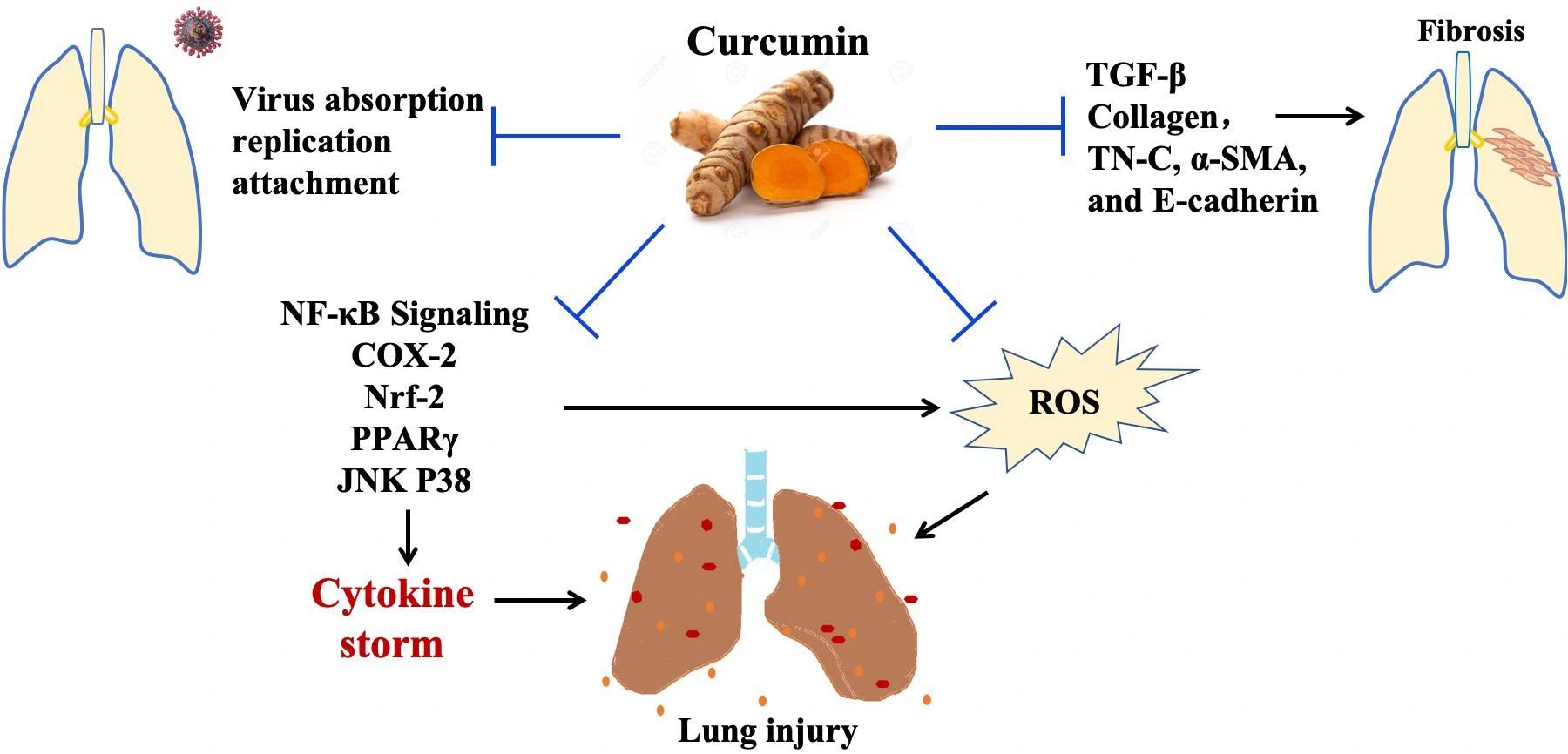
"The Inhibitory Effect of Curcumin on Virus-Induced Cytokine Storm and Its Potential Use in the Associated Severe Pneumonia" was published in June 2019 after extensive research by the following team that published the above study that was compiled after what looks like nearly a year of work in fighting the virus in China as a team of from Nanchang University. They stated:
"Coronavirus infection, including SARS-CoV, MERS-CoV, and SARS-CoV2, causes daunting diseases that can be fatal because of lung failure and systemic cytokine storm. The development of coronavirus-evoked pneumonia is associated with excessive inflammatory responses in the lung, known as “cytokine storms,” which results in pulmonary edema, atelectasis, and acute lung injury (ALI) or fatal acute respiratory distress syndrome (ARDS). No drugs are available to suppress overly immune response-mediated lung injury effectively. In light of the low toxicity and its antioxidant, anti-inflammatory, and antiviral activity, it is plausible to speculate that curcumin could be used as a therapeutic drug for viral pneumonia and ALI/ARDS. Therefore, in this review, we summarize the mounting evidence obtained from preclinical studies using animal models of lethal pneumonia where curcumin exerts protective effects by regulating the expression of both pro- and anti-inflammatory factors such as IL-6, IL-8, IL-10, and COX-2, promoting the apoptosis of PMN cells, and scavenging the reactive oxygen species (ROS), which exacerbates the inflammatory response. These studies provide a rationale that curcumin can be used as a therapeutic agent against pneumonia and ALI/ARDS in humans resulting from coronaviral infection."
The current US Patent application if approved will give exclusive rights that stretch across the globe and engulf all ideas and inventions such as what the Chinese had. We are conditioned in America to 'think' that those in the Asia's would be enemy due to history. That does not stop the questions that follow: How did this idea suddenly becomes that of the US Gov't, as taxpayers why are we funding research that goes into a patent that will be transferred to a pharma company, why are we paying a patent attorney, why is an independent researcher paid to 'own it' along with a pharmaceutical company to 'assign it' to – but with ownership underlying by the U.S. Government? A questionable practice only the feds can get away with.
Lesson: If the U.S. Government funds your research they have an undefined right to any patents that are filed based on the outcome. In this case many questions are left unanswered due to another nations duplicative research that occurred on the same subject far before what appears in the patent application last month.
FILE PROVISIONAL PATENTS & TRADEMARKS! Or, pharma and the gov't will via this route.
Title: Suppression of Cytokine Release and Cytokine Storm
Document Type and Number:
United States Patent Application 20200360300
Kind Code: A1
Abstract:
The present invention includes methods and compositions for ameliorating symptoms or treating one or more adverse reactions triggered by infectious diseases or disease conditions that trigger a widespread release of cytokines in a subject comprising the steps of: identifying the subject in need of amelioration of symptoms or treatment of the infectious diseases or disease conditions that trigger a widespread release of cytokines; and administering one or more pharmaceutical compositions comprising a therapeutically effective amount of a curcumin extract, curcuminoids or synthetic curcumin (S-curcumin) and derivatives thereof, and lipids dissolved or dispersed in a suitable aqueous or non-aqueous medium sufficient to reduce the level of cytokines in the host.
Inventors: Sordillo, Peter P. (New York, NY, US)
Helson, Lawrence (Quakertown, PA, US)
Application Number:16/945195
Publication Date:11/19/2020
Filing Date:07/31/2020
View Patent Images:Download PDF 20200360300
Export Citation: Click for automatic bibliography generation
Assignee: Signpath Pharma, Inc. (Sandy, UT, US)
International Classes:A61K31/12; A61K9/00; A61K9/127; A61K31/20; A61K31/25; A61K31/685; A61K31/688; A61P37/06Primary Examiner: PARAD, DENNIS J Attorney, Agent or Firm: CHALKER FLORES, LLP (DALLAS, TX, US)
Claims: What is claimed is:
1. A method of ameliorating symptoms or treating one or more adverse reactions triggered by a widespread release of cytokines in a subject comprising the steps of: identifying the subject in need of amelioration of symptoms or treatment of one or more infectious diseases or disease conditions that trigger a widespread release of cytokines; and administering one or more pharmaceutical compositions comprising a therapeutically effective amount of a lipid dissolved or dispersed in a suitable aqueous or non-aqueous medium sufficient to reduce the level of cytokines in the subject.
2. The method of claim 1, wherein the widespread release of cytokines is caused by one or more infectious diseases selected from at least one of viral, bacterial, fungal, helminthic, protozoan, or hemorrhagic infectious agents.
3. The method of claim 1, wherein the one or more infectious diseases is selected from at least one of infection with a Rhinovirus, Coronavirus, Paramyxoviridae, Orthomyxoviridae, Adenovirus, Parainfluenza Virus, Metapneumovirus, Respiratory Syncytial Virus, Influenza virus, Arenaviridae, Filoviridae, Bunyaviridae, Flaviviridae, Rhabdoviridae virus, Ebola, Marburg, Crimean-Congo hemorrhagic fever (CCHF), South American hemorrhagic fever, dengue, yellow fever, Rift Valley fever, Omsk hemorrhagic fever virus, Kyasanur Forest, Junin, Machupo, Sabia, Guanarito, Garissa, Ilesha, or Lassa fever viruses.
4. The method of claim 1, wherein the one or more disease conditions is selected from at least one of cachexia, septic shock syndrome, a chronic inflammatory response, septic shock syndrome, traumatic brain injury, cerebral cytokine storm, graft versus host disease (GVHD), autoimmune diseases, multiple sclerosis, acute pancreatitis, or hepatitis.
5. The method of claim 1, wherein the one or more disease conditions is an adverse reaction caused by the treatment with anti-CD19 Chimeric Antigen Receptor (CAR) T cells or antitumor cell therapy, activated dendritic cells, activated macrophages, or activated B cells.
6. The method of claim 1, wherein the composition further comprises a curcumin extract, curcumin, curcuminoids disposed in a lipid, wherein the curcuminoids are selected from at least one of Ar-tumerone, methylcurcumin, demethoxy curcumin, bisdemethoxycurcumin, sodium curcuminate, dibenzoylmethane, acetylcurcumin, feruloyl methane, tetrahydrocurcumin, 1,7-bis(4-hydroxy-3-methoxyphenyl)-1,6-heptadiene-3,5-dione (curcumin1), 1,7-bis(piperonyl)-1,6-heptadiene-3,5-dione (piperonyl curcumin) 1,7-bis(2-hydroxy naphthyl)-1,6-heptadiene-2,5-dione (2-hydroxyl naphthyl curcumin) and 1,1-bis(phenyl)-1,3,8,10 undecatetraene-5,7-dione.
7. The method of claim 6, wherein the lipid or the phospholipid is selected from the group consisting of dimyristoylphosphatidylcholine (DMPC), dimyristoylphosphatidylglycerol (DMPG), Dipalmitoylphosohatidylcholine (DPPC), di steroylphosphatidylglycerol (DSPG), dipalmitoylphosphatidylglycerol (DMPG), phosphatidylcholine, lysolecithin, lysophosphatidylethanolamine, lysoDMPC, lysoDMPG, lysoDSPG, lysoDPPC, phosphatidylserine, phosphatidylinositol, sphingomyelin, phosphatidylethanolamine, cardiolipin, phosphatidic acid, cerebrosides, dicetylphosphate, phosphatidylcholine, and dipalmitoyl-phosphatidylglycerol, stearylamine, dodecylamine, hexadecyl-amine, acetyl palmitate, glycerol ricinoleate, hexadecyl stearate, isopropyl myristate, amphoteric acrylic polymers, fatty acid, fatty acid amides, cholesterol, cholesterol ester, diacylglycerol, and diacylglycerol succinate.
8. The method of claim 1, wherein the therapeutically effective amount comprises 50 nM/kg, 10 to 100 nM/kg, 25 to 75 nM/kg, 10, 20, 30, 40, 50, 60, 70, 80, 90, or 100 nM/kg of body weight of the subject.
9. The method of claim 1, wherein the composition comprises an active agent, and has a ratio of lipid phospholipids to active agent of 3:1, 1:1, 0.3:1, and 0.1:1.
10. The method of claim 1, wherein the diseases is rheumatoid arthritis, psoriasis, multiple sclerosis, relapsing multiple sclerosis, or inflammatory bowel disease.
11. A composition for ameliorating symptoms or treating one or more adverse reactions triggered by an infectious disease or a disease condition that trigger a widespread release of cytokines in a subject comprising a therapeutically effective amount of a lipid or a lysophosphatidyl dissolved or dispersed in a suitable aqueous or non-aqueous medium.
12. The composition of claim 11, wherein the one or more infectious diseases are selected from at least one of viral, bacterial, fungal, helminthic, protozoan, or hemorrhagic infectious agents.
13. The composition of claim 11, wherein the one or more infectious diseases is selected from at least one of infection with a Rhinovirus, Coronavirus, Paramyxoviridae, Orthomyxoviridae, Adenovirus, Parainfluenza Virus, Metapneumovirus, Respiratory Syncytial Virus, Influenza Virus, Arenaviridae, Filoviridae, Bunyaviridae, Flaviviridae, Rhabdoviridae virus, Ebola, Marburg, Crimean-Congo hemorrhagic fever (CCHF), South American hemorrhagic fever, dengue, yellow fever, Rift Valley fever, Omsk hemorrhagic fever virus, Kyasanur Forest, Junin, Machupo, Sabia, Guanarito, Garissa, Ilesha, or Lassa fever viruses.
14. The composition of claim 11, wherein the one or more disease conditions is selected from at least one of cachexia, septic shock syndrome, a chronic inflammatory response, septic shock syndrome, traumatic brain injury, cerebral cytokine storm, graft versus host disease (GVHD), autoimmune diseases, multiple sclerosis, acute pancreatitis, or hepatitis.
15. The composition of claim 11, wherein the curcumin extract, curcuminoids or synthetic curcumin are disposed in a lipid.
16. The composition of claim 11, wherein the lipid or the lysophosphatidyl is selected from the group consisting of dimyristoylphosphatidylcholine (DMPC), dimyristoylphosphatidylglycerol (DMPG), Dipalmitoylphosohatidylcholine (DPPC), disteroylphosphatidylglycerol (DSPG), dipalmitoylphosphatidylglycerol (DMPG), phosphatidylcholine, lysolecithin, lysophosphatidylethanolamine, lysoDMPC, lysoDMPG, lysoDSPG, lysoDPPC, phosphatidylserine, phosphatidylinositol, sphingomyelin, phosphatidylethanolamine, cardiolipin, phosphatidic acid, cerebrosides, dicetylphosphate, phosphatidylcholine, and dipalmitoyl-phosphatidylglycerol, stearylamine, dodecylamine, hexadecyl-amine, acetyl palmitate, glycerol ricinoleate, hexadecyl stearate, isopropyl myristate, amphoteric acrylic polymers, fatty acid, fatty acid amides, cholesterol, cholesterol ester, diacylglycerol, and diacylglycerol succinate.
17. The composition of claim 11, wherein the biodegradable polymer is selected from the group consisting of polyesters, polylactides, polyglycolides, polycaprolactones, polyanhydrides, polyamides, polyurethanes, polyesteramides, polydioxanones, polyacetals, polyketals, polycarbonates, polyorthocarbonates, polyorthoesters, polyphosphoesters, polyphosphazenes, polyhydroxybutyrates, polyhydroxyvalerates, polyalkylene oxalates, polyalkylene succinates, poly(malic acid), poly(amino acids), copolymers, terpolymers, and combinations or mixtures thereof.
18. The composition of claim 11, wherein the composition adapted for intravenous, sub-cutaneous, intramuscular, or intraperitoneal injection in the subject.
19. The composition of claim 11, wherein the composition further comprises a curcumin or curcuminoids are selected from at least one of Ar-tumerone, methylcurcumin, demethoxy curcumin, bisdemethoxycurcumin, sodium curcuminate, dibenzoylmethane, acetylcurcumin, feruloyl methane, tetrahydrocurcumin, 1,7-bis(4-hydroxy-3-methoxyphenyl)-1,6-heptadiene-3,5-dione (curcumin1), 1,7-bis(piperonyl)-1,6-heptadiene-3,5-dione (piperonyl curcumin) 1,7-bis(2-hydroxy naphthyl)-1,6-heptadiene-2,5-dione (2-hydroxyl naphthyl curcumin) and 1,1-bis(phenyl)-1,3,8,10 undecatetraene-5,7-dione.
20. The composition of claim 11, wherein the composition comprises an active agent, and has a ratio of lipid to active agent of 3:1, 1:1, 0.3:1, and 0.1:1.
21. A method of determining if a candidate drug causes an amelioration of symptoms or treats one or more adverse reactions triggered by an infectious disease or a disease condition that trigger a widespread release of cytokines in a subject, the method comprising: (a) administering an amount of the candidate drug in combination with empty liposomes, and a placebo to a second subset of the patients, wherein the candidate drug is provided in an amount effective to reduce or prevent the overall level of cytokines in the subject; (b) measuring the level of cytokines in the subject from the first and second set of patients; and (c) determining if the candidate drug in combination with empty liposomes ameliorates symptoms or treats one or more adverse reactions triggered by infectious diseases or disease conditions that trigger a widespread release of cytokines is statistically significant as compared to any reduction occurring in the subset of patients that took the placebo, wherein a statistically significant reduction indicates that the candidate drug is useful in treating a disease state while also reducing or eliminating the overall level of cytokines in the subject.
22. A method of ameliorating symptoms or treating a cytokine storm caused by a therapeutic agent in a subject comprising the steps of: identifying the subject in need of amelioration of symptoms or treatment of the cytokine storm caused by a therapeutic agent; and administering one or more pharmaceutical compositions comprising a therapeutically effective amount of a curcumin extract, curcuminoids or synthetic curcumin and derivatives thereof, or empty liposomes, dissolved or dispersed in a suitable aqueous or non-aqueous medium sufficient to reduce the level of cytokines in the subject.
Description:
CROSS-REFERENCE TO RELATED APPLICATIONS
This application is a continuation-in-part of U.S. patent application Ser. No. 14/983,844 filed on Dec. 30, 2015, which claims priority to U.S. Provisional Application Ser. No. 62/098,898 filed Dec. 31, 2014, U.S. Provisional Application Ser. No. 62/165,567 filed May 22, 2015, and U.S. Provisional Application Ser. No. 62/211,450 filed Aug. 28, 2015, the entire contents of which are incorporated herein by reference.
STATEMENT OF FEDERALLY FUNDED RESEARCH
This invention was made with U.S. Government support by the USAMRIID under Project No. 1323839. The government has certain rights in this invention.
TECHNICAL FIELD OF THE INVENTION
The present invention relates in general to the field of infectious diseases and disease conditions that trigger a cytokine cascade, and more particularly, to the use of compositions that reduce the cytokine cascade.
BACKGROUND OF THE INVENTION
Without limiting the scope of the invention, its background is described in connection with infectious diseases and disease conditions that trigger, e.g., an anaphylactic cytokine cascade.
U.S. Pat. No. 8,354,276, issued to Har-Noy, entitled, “T-cell compositions that elicit type I cytokine response”, relates to a method of manipulating allogeneic cells for use in allogeneic cell therapy protocols is described. The method provides a composition of highly activated allogeneic T-cells, which are infused into immunocompetent cancer patients to elicit a novel anti-tumor immune mechanism called the “Mirror Effect”. The inventors argue that, in contrast to current allogeneic cell therapy protocols where T-cells in the graft mediate the beneficial graft vs. tumor (GVT) and detrimental graft vs. host (GVH) effects, the allogeneic cells of the invention stimulate host T-cells to mediate the “mirror” of these effects. The highly activated allogeneic cells of the invention are said to stimulate host immunity in a complete HLA mis-matched setting in patients that have not had a prior bone marrow transplant or received chemotherapy and/or radiation conditioning regimens.
U.S. Pat. No. 8,309,519, issued to Li, et al., is entitled “Compositions and methods for inhibiting vascular permeability” and relates to compounds, compositions and methods for inhibiting vascular permeability and pathologic angiogenesis. These inventors teach methods for producing and screening compounds and compositions capable of inhibiting vascular permeability and pathologic angiogenesis. It is said that the compositions described are useful in, methods of inhibiting vascular permeability and pathologic angiogenesis, including methods of inhibiting vascular permeability and pathologic angiogenesis induced by specific angiogenic, permeability and inflammatory factors, such as, for example VEGF, βFGF and thrombin.
U.S. Pat. No. 7,479,498, issued to Keller, is entitled “Treatments for viral infections” and relates to improved methods and compositions for treating viral infections and other diseases and conditions that induce a cytokine storm. It is further said that the invention relates to novel compositions comprising quercetin, and an anti-convulsant, such as phenytoin, in combination with multivitamins as an anti-viral composition and methods of use thereof.
United States Patent Application No. 20100075329, filed by O'Toole, et al., is entitled “Methods For Predicting Production Of Activating Signals By Cross-Linked Binding Proteins” and relates to human binding proteins and antigen-binding fragments thereof that specifically bind to the human interleukin-21 receptor (IL21R), and uses therefore. The invention is said to include methods to predict whether the binding proteins of the invention may take on agonistic activities in vivo and produce a cytokine storm. In addition, the invention is said to provide methods for determining whether an anti-IL21R binding protein is a neutralizing anti-IL21R binding protein, based on the identification of several IL21-responsive genes. Finally, it is said that the binding proteins can act as antagonists of IL21R activity, thereby modulating immune responses in general, and those mediated by IL21R in particular.
SUMMARY OF THE INVENTION
- In one embodiment, the present invention includes a method of ameliorating symptoms or treating one or more adverse reactions triggered by a widespread release of cytokines in a subject comprising the steps of: identifying the subject in need of amelioration of symptoms or treatment of one or more infectious diseases or disease conditions that trigger a widespread release of cytokines; and administering one or more pharmaceutical compositions comprising a therapeutically effective amount of a lipid dissolved or dispersed in a suitable aqueous or non-aqueous medium sufficient to reduce the level of cytokines in the subject. In one aspect, the widespread release of cytokines is caused by one or more infectious diseases selected from at least one of viral, bacterial, fungal, helminthic, protozoan, or hemorrhagic infectious agents. In another aspect, the one or more infectious diseases is selected from at least one of infection with a Rhinovirus, Coronavirus, Paramyxoviridae, Orthomyxoviridae, Adenovirus, Parainfluenza Virus, Metapneumovirus, Respiratory Syncytial Virus, Influenza virus, Arenaviridae, Filoviridae, Bunyaviridae, Flaviviridae, Rhabdoviridae virus, Ebola, Marburg, Crimean-Congo hemorrhagic fever (CCHF), South American hemorrhagic fever, dengue, yellow fever, Rift Valley fever, Omsk hemorrhagic fever virus, Kyasanur Forest, Junin, Machupo, Sabia, Guanarito, Garissa, Ilesha, or Lassa fever viruses. In another aspect, the one or more disease conditions is selected from at least one of cachexia, septic shock syndrome, a chronic inflammatory response, septic shock syndrome, traumatic brain injury, cerebral cytokine storm, graft versus host disease (GVHD), autoimmune diseases, multiple sclerosis, acute pancreatitis, or hepatitis. In another aspect, the one or more disease conditions is an adverse reaction caused by the treatment with anti-CD19 Chimeric Antigen Receptor (CAR) T cells or antitumor cell therapy, activated dendritic cells, activated macrophages, or activated B cells. In another aspect, the composition further comprises a curcumin extract, curcumin, curcuminoids disposed in a lipid, wherein the curcuminoids are selected from at least one of Ar-tumerone, methylcurcumin, demethoxy curcumin, bisdemethoxycurcumin, sodium curcuminate, dibenzoylmethane, acetylcurcumin, feruloyl methane, tetrahydrocurcumin, 1,7-bis(4-hydroxy-3-methoxyphenyl)-1,6-heptadiene-3,5-dione (curcumin1), 1,7-bis(piperonyl)-1,6-heptadiene-3,5-dione (piperonyl curcumin) 1,7-bis(2-hydroxy naphthyl)-1,6-heptadiene-2,5-dione (2-hydroxyl naphthyl curcumin) and 1,1-bis(phenyl)-1,3,8,10 undecatetraene-5,7-dione. In another aspect, the lipid or the phospholipid is selected from the group consisting of dimyristoylphosphatidylcholine (DMPC), dimyristoylphosphatidylglycerol (DMPG), Dipalmitoylphosohatidylcholine (DPPC), disteroylphosphatidylglycerol (DSPG), dipalmitoylphosphatidylglycerol (DMPG), phosphatidylcholine, lysolecithin, lysophosphatidylethanolamine, lysoDMPC, lysoDMPG, lysoDSPG, lysoDPPC, phosphatidylserine, phosphatidylinositol, sphingomyelin, phosphatidylethanolamine, cardiolipin, phosphatidic acid, cerebrosides, dicetylphosphate, phosphatidylcholine, and dipalmitoyl-phosphatidylglycerol, stearylamine, dodecylamine, hexadecyl-amine, acetyl palmitate, glycerol ricinoleate, hexadecyl stearate, isopropyl myristate, amphoteric acrylic polymers, fatty acid, fatty acid amides, cholesterol, cholesterol ester, diacylglycerol, and diacylglycerolsuccinate. In another aspect, the therapeutically effective amount comprises 50 nM/kg, 10 to 100 nM/kg, 25 to 75 nM/kg, 10, 20, 30, 40, 50, 60, 70, 80, 90, or 100 nM/kg of body weight of the subject. In another aspect, the composition comprises an active agent, and has a ratio of lipid phospholipids to active agent of 3:1, 1:1, 0.3:1, and 0.1:1. In another aspect, the diseases is rheumatoid arthritis, psoriasis, multiple sclerosis, relapsing multiple sclerosis, or inflammatory bowel disease.
In another embodiment, the present invention includes a composition for ameliorating symptoms or treating one or more adverse reactions triggered by an infectious disease or a disease condition that trigger a widespread release of cytokines in a subject comprising a therapeutically effective amount of a lipid or a lysophosphatidyl dissolved or dispersed in a suitable aqueous or non-aqueous medium. In one aspect, the one or more infectious diseases are selected from at least one of viral, bacterial, fungal, helminthic, protozoan, or hemorrhagic infectious agents. In another aspect, the one or more infectious diseases is selected from at least one of infection with a Rhinovirus, Coronavirus, Paramyxoviridae, Orthomyxoviridae, Adenovirus, Parainfluenza Virus, Metapneumovirus, Respiratory Syncytial Virus, Influenza Virus, Arenaviridae, Filoviridae, Bunyaviridae, Flaviviridae, Rhabdoviridae virus, Ebola, Marburg, Crimean-Congo hemorrhagic fever (CCHF), South American hemorrhagic fever, dengue, yellow fever, Rift Valley fever, Omsk hemorrhagic fever virus, Kyasanur Forest, Junin, Machupo, Sabia, Guanarito, Garissa, Ilesha, or Lassa fever viruses. In another aspect, the one or more disease conditions is selected from at least one of cachexia, septic shock syndrome, a chronic inflammatory response, septic shock syndrome, traumatic brain injury, cerebral cytokine storm, graft versus host disease (GVHD), autoimmune diseases, multiple sclerosis, acute pancreatitis, or hepatitis. In another aspect, the curcumin extract, curcuminoids or synthetic curcumin are disposed in a lipid. In another aspect, the or the lysophosphatidyl is selected from the group consisting of dimyristoylphosphatidylcholine (DMPC), dimyristoylphosphatidylglycerol (DMPG), Dipalmitoylphosohatidylcholine (DPPC), disteroylphosphatidylglycerol (DSPG), dipalmitoylphosphatidylglycerol (DMPG), phosphatidylcholine, lysolecithin, lysophosphatidylethanolamine, lysoDMPC, lysoDMPG, lysoDSPG, lysoDPPC, phosphatidylserine, phosphatidylinositol, sphingomyelin, phosphatidylethanolamine, cardiolipin, phosphatidic acid, cerebrosides, dicetylphosphate, phosphatidylcholine, and dipalmitoyl-phosphatidylglycerol, stearylamine, dodecylamine, hexadecyl-amine, acetyl palmitate, glycerol ricinoleate, hexadecyl stearate, isopropyl myristate, amphoteric acrylic polymers, fatty acid, fatty acid amides, cholesterol, cholesterol ester, diacylglycerol, and diacylglycerolsuccinate. In another aspect, the biodegradable polymer is selected from the group consisting of polyesters, polylactides, polyglycolides, polycaprolactones, polyanhydrides, polyamides, polyurethanes, polyesteramides, polydioxanones, polyacetals, polyketals, polycarbonates, polyorthocarbonates, polyorthoesters, polyphosphoesters, polyphosphazenes, polyhydroxybutyrates, polyhydroxyvalerates, polyalkylene oxalates, polyalkylene succinates, poly(malic acid), poly(amino acids), copolymers, terpolymers, and combinations or mixtures thereof. In another aspect, the composition adapted for intravenous, sub-cutaneous, intramuscular, or intraperitoneal injection in the subject. In another aspect, the composition further comprises a curcumin or curcuminoids are selected from at least one of Ar-tumerone, methylcurcumin, demethoxy curcumin, bisdemethoxycurcumin, sodium curcuminate, dibenzoylmethane, acetylcurcumin, feruloyl methane, tetrahydrocurcumin, 1,7-bis(4-hydroxy-3-methoxyphenyl)-1,6-heptadiene-3,5-dione (curcumin1), 1,7-bis(piperonyl)-1,6-heptadiene-3,5-dione (piperonyl curcumin) 1,7-bis(2-hydroxy naphthyl)-1,6-heptadiene-2,5-dione (2-hydroxyl naphthyl curcumin) and 1,1-bis(phenyl)-1,3,8,10 undecatetraene-5,7-dione. In another aspect, the composition comprises an active agent, and has a ratio of lipid to active agent of 3:1, 1:1, 0.3:1, and 0.1:1.
- In another embodiment, the present invention includes a method of determining if a candidate drug causes an amelioration of symptoms or treats one or more adverse reactions triggered by an infectious disease or a disease condition that trigger a widespread release of cytokines in a subject, the method comprising: (a) administering an amount of the candidate drug in combination with empty liposomes, and a placebo to a second subset of the patients, wherein the candidate drug is provided in an amount effective to reduce or prevent the overall level of cytokines in the subject; (b) measuring the level of cytokines in the subject from the first and second set of patients; and (c) determining if the candidate drug in combination with empty liposomes ameliorates symptoms or treats one or more adverse reactions triggered by infectious diseases or disease conditions that trigger a widespread release of cytokines is statistically significant as compared to any reduction occurring in the subset of patients that took the placebo, wherein a statistically significant reduction indicates that the candidate drug is useful in treating a disease state while also reducing or eliminating the overall level of cytokines in the subject.
- In another embodiment, the present invention includes a method of ameliorating symptoms or treating a cytokine storm caused by a therapeutic agent in a subject comprising the steps of: identifying the subject in need of amelioration of symptoms or treatment of the cytokine storm caused by a therapeutic agent; and administering one or more pharmaceutical compositions comprising a therapeutically effective amount of a curcumin extract, curcuminoids or synthetic curcumin and derivatives thereof, or empty liposomes, dissolved or dispersed in a suitable aqueous or non-aqueous medium sufficient to reduce the level of cytokines in the subject.
DETAILED DESCRIPTION OF THE INVENTION: Click here for the balance of the Patent App
This research itself is extremely important during our current battle – although Cytokine Storm and Cytokine Release are an issue with almost every other health issue we endure.
Thank you for visiting GCRC,
–Mike Robinson, Founder – Global Cannabinoid Research Center / GCRC Publications
This article is educational commentary from GCRC. It is not a report of study findings and is not medical advice. Speak with a qualified healthcare professional about your own health.