Nanomolar Concentrations:CBG Binds to Orthosteric Site of CB2R
Many have asked "why are you focused on these minor cannabinoids" and the answer is simple - they're the now and the future of Cananbinoid Medicine. In this share we discover how CBG binds to...
 Mike Robinson
3 min read
Many have asked "why are you focused on these minor cannabinoids" and the answer is simple – they're the now and the future of Cananbinoid Medicine. In this share we discover how CBG binds to Cannabinoid receptors in a rather interesting way. Of course we can't delve into the depths of how we interpret and use this research to formulate but in sharing this information it should open some eyes in how CBG is a very useful minor cannabinoid that can do some things others simply can not do – or haven't been proven to do quite yet.
The addition of phyto-nutrients in nano emulsification coupled with CBG has increased it's abilities in ways that are incredible, research has been furthered to investigate the how and why with the future expansion of the Global Cannabinoid Research Center on the Horizon. Let's take a look at this study and this particular part of it that caught the GCRC's attention.
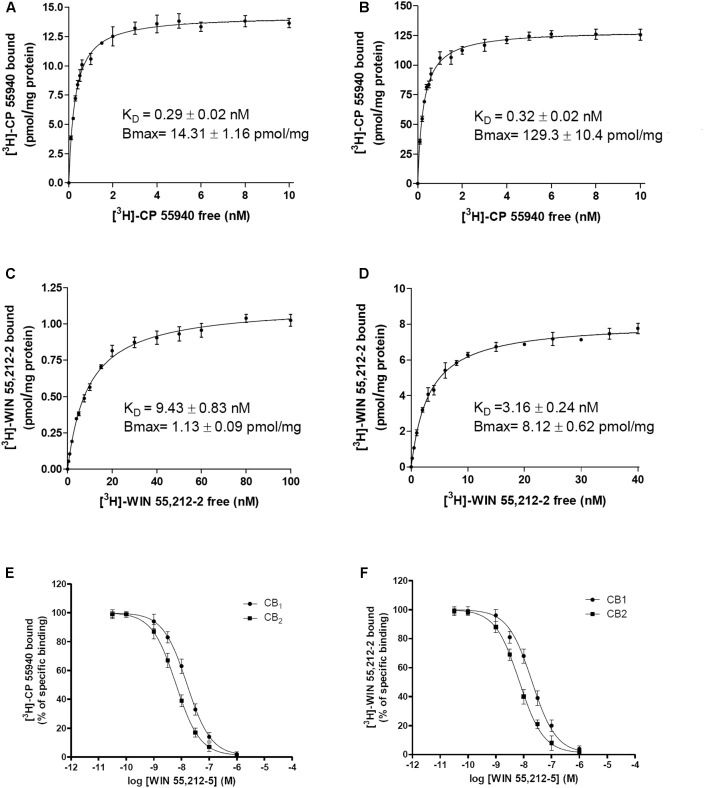
(Image and excerpt from Navarro G, Varani K, Reyes-Resina I, et al. Cannabigerol Action at Cannabinoid CB1 and CB2 Receptors and at CB1-CB2 Heteroreceptor Complexes. Front Pharmacol. 2018;9:632. Published 2018 Jun 21. doi:10.3389/fphar.2018.00632 )
"Competition experiments were performed using 20 nM of a fluorophore-conjugated selective CB2R agonist (CM-157) and a homogeneous non-radioactive method performed in living cells expressing SNAP-CB2R (details in Martínez-Pinilla et al., 2016; Figure Figure2C2C). Unfortunately, the equivalent fluorophore-conjugated selective CB1R ligand is not available to perform HTRF assays in SNAP-CB1R-expressing living cells. Competition assays were performed in HEK-293T cells expressing Lumi4-Tb-labeled CB2R fused to the SNAP protein and incubated with a fixed amount of the fluorophore-conjugated agonist and different CBG concentrations. As observed in Figure Figure22, both the unlabelled selective agonist (CM-157) and CBG decreased the binding to SNAP-CB2R in monophasic fashion and with Ki values in the nanomolar range (16 nM for CM-157 and of 152 nM for CBG; Figures 2D,E). The Ki obtained for CM-157 matches with previously reported dissociation constant KD values (Martínez-Pinilla et al., 2016). These results indicate that CBG can significantly bind to the orthosteric site of cannabinoid CB2R at nanomolar concentrations.
Similar experiments were carried out in HEK-293T cells expressing SNAP-CB2R fusion protein and a similar amount of CB1R, i.e., in cells that express CB2R in a CB1–CB2 receptor heteromer context. In the presence of cannabinoid CB1R the Ki for CM-157 was 19 nM (Figure Figure2F2F) and Ki for CBG was reduced (56 nM, Figure Figure2G2G). These results indicate that in cells expressing both cannabinoid receptors, CB1 and CB2, CBG shows higher affinity for cannabinoid CB2R."
With this information under our belt amazing things began to occur in R&D – quickly as phyto nutrients of all types were made into nano emulsification we found that a combination of minor cannabinods would do many things that nobody ever imagined. Of course the research is lengthy and the cost of this type of cannabinoid medicine has yet to be extremely affordable but with new technologies we're looking to help change that. There's so much to learn and so many cannabinoids and terpenes to choose from in this marvelous plant that seemed to be filled with suprises.
Mike Robinson, Founder, Global Cannabinoid Research Center
This article is educational commentary from GCRC. It is not a report of study findings and is not medical advice. Speak with a qualified healthcare professional about your own health.