Cannabis, Cannabinoids and Rheumatic Disease: A Major 2026 Review Finds Promise, But the Details Matter
 Mike Robinson
11 min read
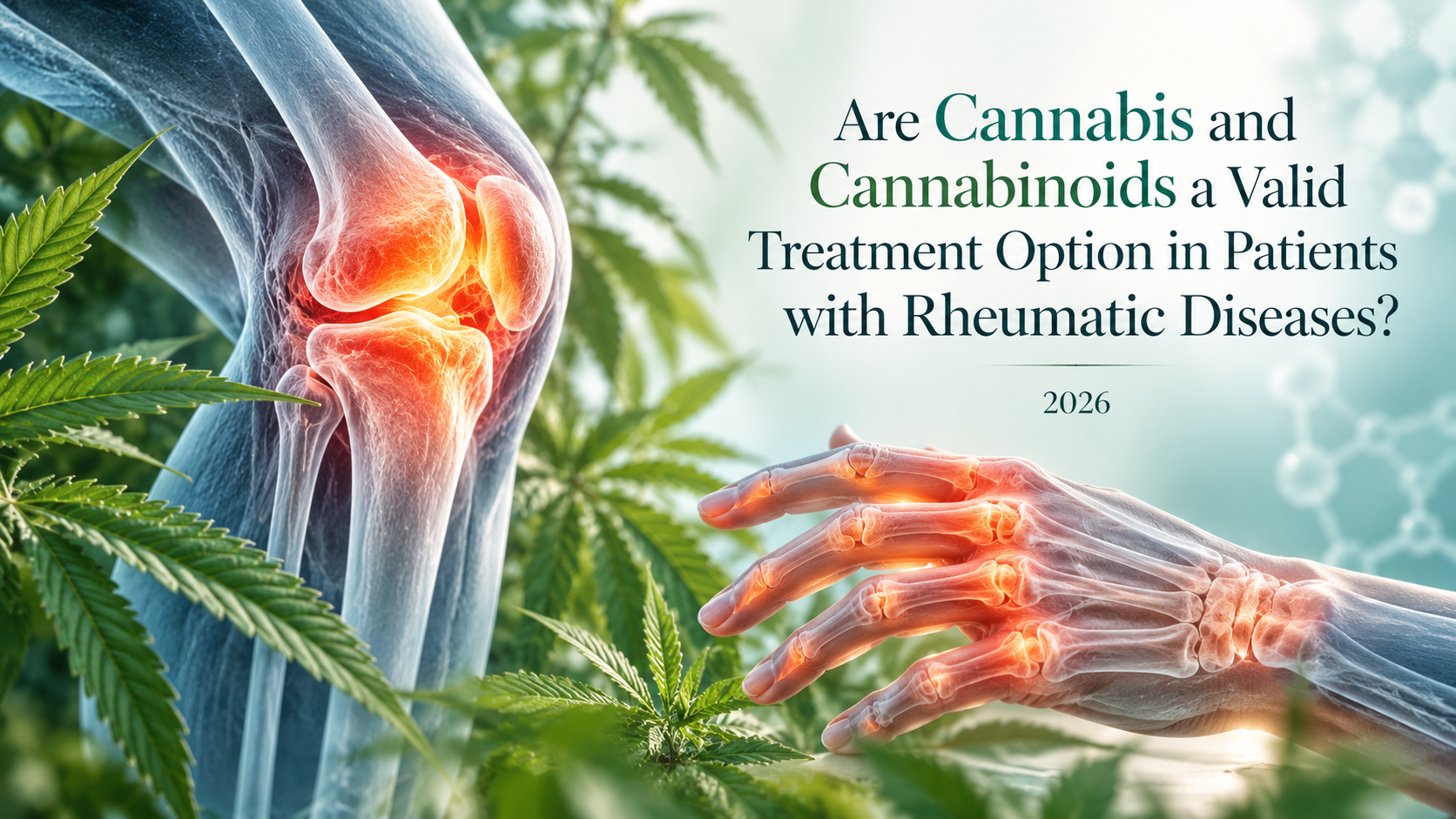
A newly published 2026 review in Joint Bone Spine takes on a question patients with arthritis, fibromyalgia, and other rheumatic conditions have been asking for years: Are cannabis and cannabinoids actually valid treatment options?
The answer is more interesting than either “yes” or “no.”
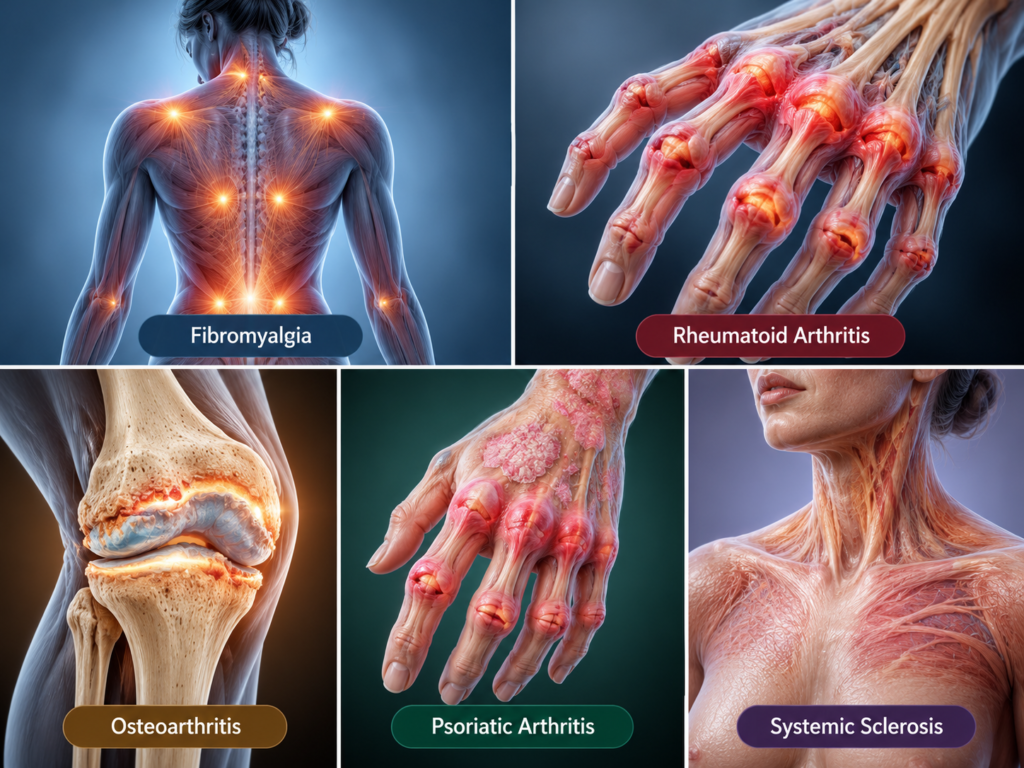
The review evaluated research published from 2000 through 2026, including 17 preclinical studies examining cannabinoid mechanisms and 43 clinical studies involving patients with rheumatic diseases. The clinical literature included randomized controlled trials, observational research, and systematic reviews. Fibromyalgia accounted for the largest body of evidence, followed by osteoarthritis, rheumatoid arthritis, psoriatic arthritis, and systemic sclerosis. [1]
The strongest clinical evidence was found in fibromyalgia, particularly for pain and sleep. Evidence for rheumatoid arthritis and osteoarthritis was considerably more limited. Overall, the review found cannabinoids were generally well tolerated in the studies examined. Still, the authors concluded that the existing evidence remains too inconsistent and heterogeneous to recommend routine cannabinoid treatment across rheumatic diseases. [1]
That conclusion deserves some context. This research does not tell us that cannabinoids do not work. It tells us something more useful: different cannabinoids, ratios, delivery systems, doses, and rheumatic diseases can produce very different outcomes.
Why This Review Matters More Than Another Cannabis Pain Study
One of the persistent problems in cannabinoid research is the tendency to place cannabis, THC, CBD, synthetic cannabinoids, balanced THC formulations, and selective cannabinoid receptor agonists into the same general bucket.
Pharmacologically, they are not the same thing. CBD alone is not equivalent to THC. THC is not equivalent to a balanced THC preparation. A CB2 selective compound is another intervention altogether. Oral oils, inhaled flower, synthetic cannabinoids, and oromucosal sprays also produce different pharmacokinetic profiles.
That distinction becomes obvious when we look at the clinical evidence included in this field. A controlled rheumatoid arthritis trial using a THC oromucosal formulation enrolled 58 patients and ran for five weeks. Compared with placebo, cannabinoid treatment produced statistically significant improvements in pain during movement, pain at rest, sleep quality, and DAS28 disease activity scores. The effects were relatively modest, but they were measurable. [2]
Now compare that with CBD alone. A randomized, double-blind, placebo-controlled trial involving people with hand osteoarthritis and psoriatic arthritis tested 20 to 30 mg of synthetic CBD daily for 12 weeks. There was essentially no difference between CBD and placebo for pain. The between-group difference at 12 weeks was only 0.23 mm on a 100 mm pain scale, with a P value of 0.96. Sleep, anxiety, depression, and pain catastrophizing were also not significantly improved. [3]
Same cannabinoid family but with a very different result. That is exactly why saying “cannabinoids work” or “cannabinoids don’t work” is scientifically inadequate. We have to ask which cannabinoid, at what dose, in what ratio, through what delivery system, for which biological problem. That is where the Endocannabinoid System enters the discussion.

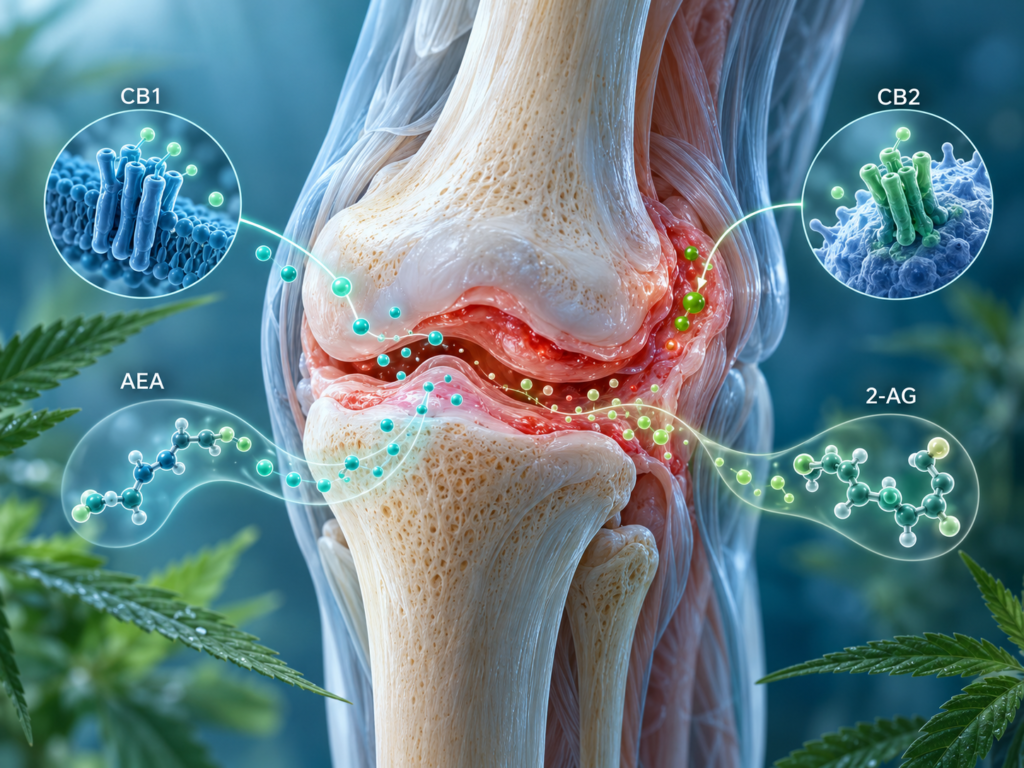
The ECS Is Already Active Inside Arthritic Joints
The biological argument for investigating cannabinoids in rheumatic disease is not based simply on cannabis reducing someone’s perception of pain. Components of the Endocannabinoid System are present directly inside joint tissue.
Research examining synovial tissue and fluid from patients with osteoarthritis and rheumatoid arthritis identified CB1 and CB2 receptor expression in diseased synovial tissue. Researchers also detected the endocannabinoids anandamide, or AEA, and 2-arachidonoylglycerol, or 2-AG, in synovial fluid from patients with osteoarthritis and rheumatoid arthritis. Interestingly, AEA and 2-AG were not detectable in synovial fluid taken from healthy volunteers in that study. [4]
PEA and OEA were also found in this environment, along with FAAH activity, the enzyme prominently involved in breaking down anandamide and several related lipid signaling molecules. [4] That does not prove that an Endocannabinoid System deficiency causes arthritis.
It actually argues against oversimplifying ECS biology that way.
It shows that the ECS responds within diseased joint tissue. Pain, inflammation, immune activity, synovial signaling, neuronal signaling, and tissue damage can all influence local endocannabinoid production and receptor activity.
The important question may not simply be whether someone’s endocannabinoids are “high” or “low.” The real question is whether signaling is appropriately regulated for that biological environment. Fibromyalgia makes this even more interesting.
A systematic review and meta-analysis examining endocannabinoids and related N-acylethanolamines in chronic widespread pain and fibromyalgia found increased plasma OEA and stearoylethanolamide in fibromyalgia, along with changes in PEA and other related lipids in chronic widespread pain. These findings do not support a simple universal endocannabinoid deficiency model. Instead, they suggest altered or compensatory ECS-related signaling. [5]
A 2026 randomized trial examining a 1:1 THC oil in fibromyalgia adds another layer. Despite clinical improvement signals in the larger trial, plasma PEA, OEA, and SEA remained relatively stable. Anandamide and 2-AG were below the assay’s detection limits in the plasma samples collected. [6]
In plain English, someone can experience a cannabinoid related clinical effect without showing an obvious corresponding shift in peripheral endocannabinoid blood markers.
The ECS is not a fuel gauge. It’s a dynamic signaling network operating differently across tissues, receptors, enzymes, immune cells, nerves, and physiological states.
What the Human Evidence Actually Shows
Fibromyalgia
Fibromyalgia carries the strongest cannabinoid evidence in the new review, with 28 publications identified, including seven randomized controlled trials. [1]
Several controlled studies have produced meaningful signals.
A randomized, placebo-controlled trial involving 40 patients tested nabilone, a synthetic cannabinoid. After four weeks, the nabilone group showed significant improvements in pain, Fibromyalgia Impact Questionnaire scores, and anxiety compared with baseline and placebo, although adverse effects were more frequent. [7]
Another randomized crossover study compared nabilone with amitriptyline in fibromyalgia patients with chronic insomnia. Both improved sleep, but nabilone performed better on the primary insomnia measurement. Pain and quality of life did not improve significantly in that trial, again showing that cannabinoid effects can differ depending on the outcome measured. [8]
An experimental study using precisely characterized inhaled cannabis formulations containing different ratios of THC and CBD found increased pressure pain thresholds with THC-containing products. However, none of the products clearly outperformed placebo across all spontaneous pain outcomes. CBD alone did not produce meaningful analgesia, and interactions between THC and CBD were complex rather than automatically synergistic. [9]
An eight-week randomized trial of a THC-rich cannabis oil involving 17 women with fibromyalgia also reported significant improvement in Fibromyalgia Impact Questionnaire scores compared with placebo, including improvements in pain, fatigue, ability to work, and overall well-being. However, the sample was extremely small. [10]
Another important study followed in 2026.
A double-masked randomized pilot trial evaluated a 1:1 THC oil in 24 adults with fibromyalgia. It was primarily designed to examine feasibility and safety rather than prove efficacy, but preliminary results favored cannabis for pain, sleep quality, and overall fibromyalgia impact.
Seventy percent of participants receiving cannabis reported at least a 30 percent reduction in pain after titration and again at week 12, compared with 20 percent and 40 percent in the placebo group at those respective measurements. Because of the tiny sample, these findings need a much larger trial before firm conclusions can be made. [11] So fibromyalgia is promising, but it is not settled science.
Rheumatoid arthritis
The evidence here is surprisingly thin.
A 2026 scoping review searched 593 records and found only three clinical studies that met inclusion criteria for cannabinoid related pain treatment in rheumatoid arthritis. Only one was a randomized controlled intervention trial. [12]
That trial involved the THC oromucosal formulation discussed earlier. Pain on movement decreased by approximately 0.95 points, pain at rest by 1.04 points, sleep improved by approximately 1.17 points, and DAS28 decreased by 0.76 points compared with placebo. No serious adverse events were reported during the short trial. [12] The intriguing finding is the reduction in DAS28, which raises a question beyond analgesia.
Could cannabinoid signaling influence inflammatory disease activity?
Possibly.
But one small five-week trial cannot establish disease modification. Reduced pain and altered inflammatory signaling can affect composite disease scores, and no convincing evidence currently demonstrates that cannabinoid treatment prevents joint destruction or changes the long-term natural history of rheumatoid arthritis.
That distinction matters as pain relief is treatment. Disease modification is an entirely different claim.
Osteoarthritis and psoriatic arthritis
The biological rationale for targeting the ECS in osteoarthritis is strong. CB1, CB2, endocannabinoids, FAAH, PEA, and OEA have all been demonstrated within arthritic joint environments. Animal and laboratory research provides substantial evidence that ECS signaling can influence nociception and inflammatory activity. [4,13] Clinical translation has been much less impressive.
One of the better controlled CBD studies enrolled 136 people with hand osteoarthritis or psoriatic arthritis and found no clinically meaningful benefit from 20 to 30 mg of CBD daily for pain, sleep, anxiety, depression, or functional outcomes. [3]
That result should not be interpreted as meaning the ECS is irrelevant to osteoarthritis. It tells us that this specific dose of isolated CBD, administered in this particular way to this particular population, failed to produce the desired clinical result. Those are two very different scientific conclusions.
Systemic sclerosis
Systemic sclerosis provides one of the best examples of why early cannabinoid findings need larger trials.
Lenabasum is a synthetic compound designed to activate CB2 rather than produce the psychoactive effects associated with CB1 activation.
A small phase 2 trial in diffuse cutaneous systemic sclerosis produced encouraging results across overall disease measures, skin involvement, inflammatory pathways, fibrosis-related markers, and patient-reported function. [14]
Then came the larger test.
A phase 3 trial randomized 365 patients to lenabasum or placebo on top of background treatment. The primary endpoint was not met. At 52 weeks, the main composite response score was virtually identical between the higher-dose lenabasum group and placebo. [15]
That is exactly why controlled clinical research matters. A biological mechanism can make perfect sense and a small study can look promising.
A phase 3 trial can still say otherwise.
What GCRC Takes From This Review
This new review is important because it moves the discussion beyond the old question of whether cannabis has any place in rheumatic disease.
Sufficient biological and clinical evidence supports continued investigation. There is not enough evidence to treat every rheumatic disease as a cannabinoid responsive condition.
The clearest signal right now appears to involve symptom management, particularly pain and sleep in fibromyalgia. Rheumatoid arthritis has some intriguing early findings, but the clinical evidence remains remarkably sparse. Osteoarthritis has substantial mechanistic justification but inconsistent human outcomes. CBD isolate by itself has certainly not emerged as a universal answer. Systemic sclerosis demonstrates how promising CB2 biology can fail to translate into a successful large clinical trial. [1,3,12,15]
For GCRC, one of the most important lessons is chemical specificity.
Future cannabinoid research should stop asking whether “cannabis” works and start asking which molecules are influencing which pathways.
THC, CBD, CBG, CBGA, acidic cannabinoids, minor cannabinoids, synthetic receptor agonists, endocannabinoids such as anandamide and 2-AG, and related lipid mediators such as PEA and OEA should not automatically be treated as interchangeable variables.
Receptor activation should not be examined without receptor regulation.

CB1 signaling, CB2 signaling, FAAH activity, MAGL activity, TRPV channels, PPAR signaling, inflammatory cytokines, endocannabinoid concentrations, receptor availability, dosing history, and cannabinoid tolerance may all influence the final biological response.
This review also reinforces something cannabinoid research has struggled with for decades: product heterogeneity makes conclusions messy.
One study uses isolated CBD, another uses THC, another uses a balanced THC extract, and yet another studies a synthetic cannabinoid. At the same time, one more activates CB2 selectively.
Then all five get discussed under the word “cannabinoids.” That is scientifically convenient, but biologically sloppy.
The next generation of rheumatology research needs chemically characterized products, defined doses, standardized delivery systems, longer follow-up, larger patient populations, and measurement of both symptom outcomes and biological markers.
We also need research that distinguishes analgesia from anti-inflammatory activity and anti-inflammatory activity from actual disease modification. Those are three different outcomes.
The 2026 Joint Bone Spine review does not establish cannabinoids as routine rheumatology treatment. It does something just as important: it shows where signals are appearing and where the evidence still falls apart.
Fibromyalgia deserves serious continued investigation.
The ECS inside arthritic tissue deserves serious investigation.
Individual cannabinoids deserve to be studied individually and in rational combinations.
And we need to quit expecting one cannabinoid, one ratio, or one formulation to answer every question involving pain and inflammation.
The plant is complicated because the biology it interacts with is complicated.
That biology is the Endocannabinoid System.
Mike Robinson, Founder, Global Cannabinoid Research Center
References
- Are Cannabis and Cannabinoids a Valid Treatment Option in Patients with Rheumatic Diseases? A Narrative Review. Joint Bone Spine. 2026. Article 106154. DOI: 10.1016/j.jbspin.2026.106154. PMID: 42946199.
- Preliminary Assessment of the Efficacy, Tolerability and Safety of a Cannabis Based Medicine in the Treatment of Pain Caused by Rheumatoid Arthritis. Rheumatology. 2006;45(1):50-52. DOI: 10.1093/rheumatology/kei183. PMID: 16282192.
- Cannabidiol Treatment in Hand Osteoarthritis and Psoriatic Arthritis: A Randomized, Double Blind, Placebo-Controlled Trial. Pain. 2022;163(6):1206-1214. DOI: 10.1097/j.pain.0000000000002466. PMID: 34510141.
- Characterization of the Cannabinoid Receptor System in Synovial Tissue and Fluid in Patients With Osteoarthritis and Rheumatoid Arthritis. Arthritis Research & Therapy. 2008. DOI: 10.1186/ar2401. PMID: 18416822.
- Plasma and Interstitial Levels of Endocannabinoids and N-Acylethanolamines in Patients With Chronic Widespread Pain and Fibromyalgia: A Systematic Review and Meta-Analysis. PAIN Reports. 2022. DOI: 10.1097/PR9.0000000000001045. PMID: 36381652.
- Oral Medicinal Cannabis Does Not Alter Plasma Levels of Endocannabinoid-Related N-Acylethanolamines in Fibromyalgia Patients: Findings From a Randomized Placebo-Controlled Trial. Cannabis and Cannabinoid Research. 2026. DOI: 10.1177/25785125261469541. PMID: 42464432.
- Nabilone for the Treatment of Pain in Fibromyalgia. Journal of Pain. 2008;9(2):164-173. DOI: 10.1016/j.jpain.2007.09.002. PMID: 17974490.
- The Effects of Nabilone on Sleep in Fibromyalgia: Results of a Randomized Controlled Trial. Anesthesia & Analgesia. 2010;110(2):604-610. DOI: 10.1213/ANE.0b013e3181c76f70. PMID: 20007734.
- An Experimental Randomized Study on the Analgesic Effects of Pharmaceutical-Grade Cannabis in Chronic Pain Patients With Fibromyalgia. Pain. 2019. DOI: 10.1097/j.pain.0000000000001464. PMID: 30585986.
- Ingestion of a THC-Rich Cannabis Oil in People With Fibromyalgia: A Randomized, Double Blind, Placebo-Controlled Clinical Trial. Pain Medicine. 2020;21(10):2212-2218. DOI: 10.1093/pm/pnaa303. PMID: 33118602.
- Feasibility, Safety and Preliminary Efficacy of 1:1 THC Cannabis Oil for Fibromyalgia Symptoms: Results From a Randomized, Double Blind, Placebo-Controlled Pilot Trial. Pain Research and Management. 2026. DOI: 10.1155/prm/7311235. PMID: 42142029.
- Cannabinoids for Pain Management in Rheumatoid Arthritis: A Scoping Review of Clinical Evidence and Mechanisms. Rheumatology International. 2026;46:275. DOI: 10.1007/s00296-026-06314-x. PMID: 42831900.
- Involvement of the Endocannabinoid System in Osteoarthritis Pain. European Journal of Neuroscience. 2014;39(3):485-500. DOI: 10.1111/ejn.12468. PMID: 24494687.
- Safety and Efficacy of Lenabasum in a Phase II, Randomized, Placebo-Controlled Trial in Adults With Systemic Sclerosis. Arthritis & Rheumatology. 2020;72(8):1350-1360. DOI: 10.1002/art.41294. PMID: 32336038.
- Efficacy and Safety of Lenabasum, a Cannabinoid Type 2 Receptor Agonist, in a Phase 3 Randomized Trial in Diffuse Cutaneous Systemic Sclerosis. Arthritis & Rheumatology. 2023;75(9):1608-1618. DOI: 10.1002/art.42510. PMID: 37098795.
This article is educational commentary from GCRC. It is not a report of study findings and is not medical advice. Speak with a qualified healthcare professional about your own health.