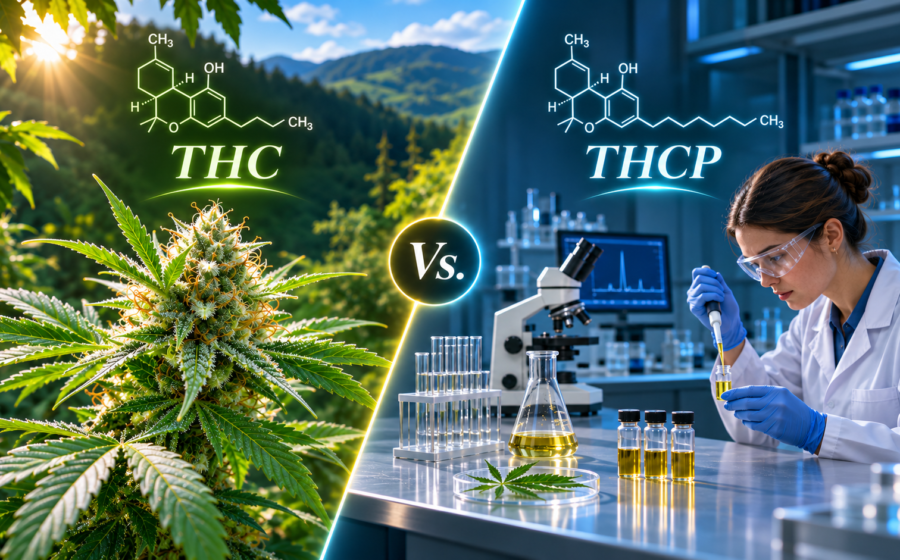
THC, Anandamide and the Human Brain: New Research Challenges Current FAAH Knowledge
 Mike Robinson
7 min read
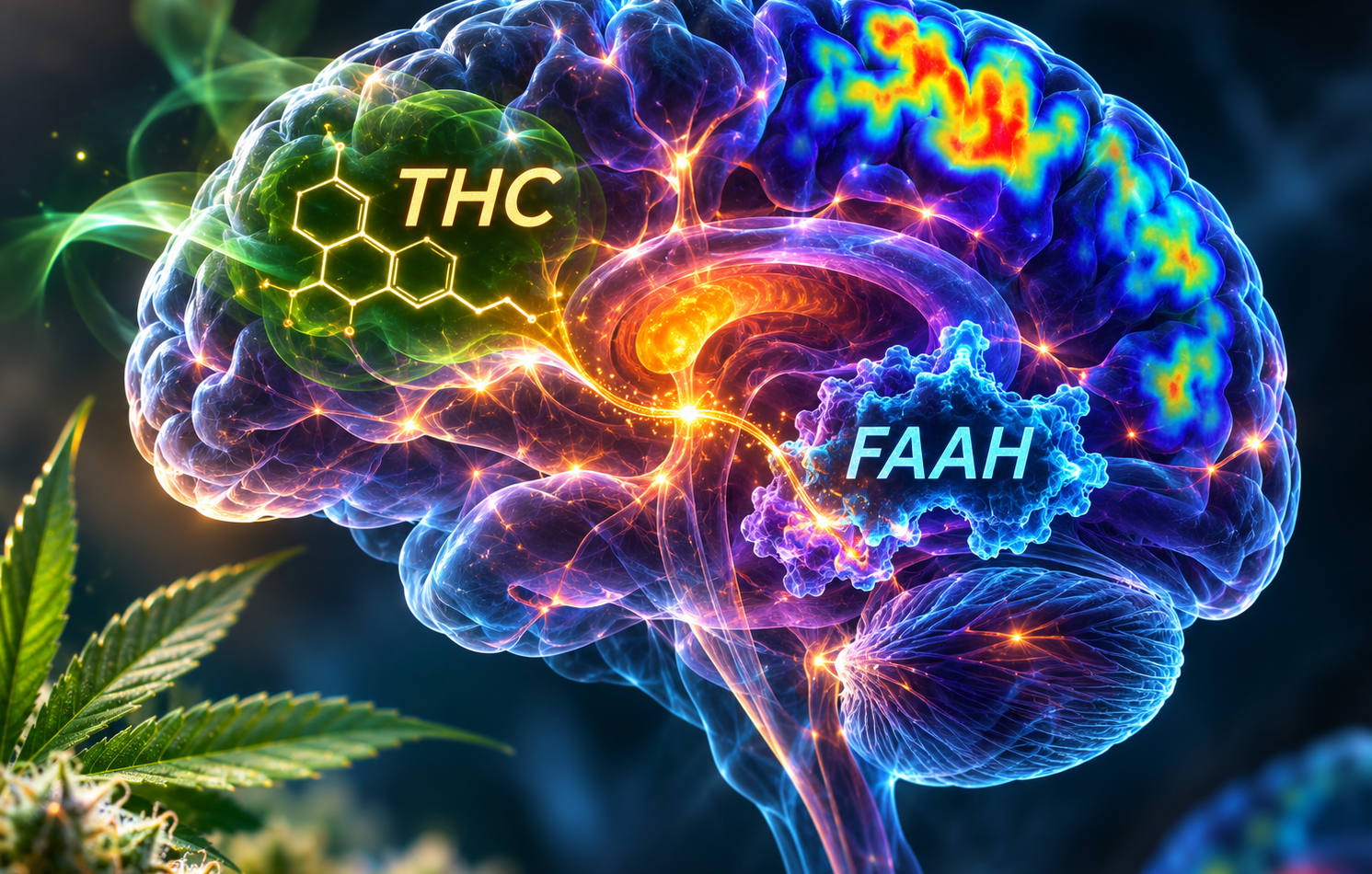
What happens to our brain’s own cannabinoid regulation when we repeatedly stimulate it with THC? It’s a question that goes far beyond the intoxicating effects of cannabis, and new human research is giving us a fascinating look at the relationship between cannabinoid receptor stimulation, anandamide, and the enzymes that help regulate our Endocannabinoid System (ECS).
Published November 9, 2026, the study “Testing the impact of cannabinoid stimulation on fatty acid amide hydrolase binding in the human brain: pilot [11C]CURB PET study” examined whether repeated exposure to nabilone, a synthetic pharmaceutical designed to mimic THC, changes FAAH availability in the human brain.
The investigators expected to see a reduction in this important enzyme. Instead, participants experienced recognizable cannabinoid effects without a measurable average change in FAAH. For those of us studying THC tolerance and ECS Balance Control, this finding opens up some particularly interesting questions about how our bodies respond to cannabinoids over time.
Understanding FAAH, Anandamide, and What THC Is Actually Stimulating
Anandamide, scientifically known as arachidonyl-ethanolamide (AEA), is one of the primary cannabinoids our bodies produce. It helps regulate pain, mood, memory, appetite, and stress responses, helping our biological systems respond to changing conditions.
Like THC, anandamide activates CB1 receptors, which are widely distributed throughout the human brain. However, these two cannabinoids aren’t regulated the same way. Fatty acid amide hydrolase (FAAH) is the primary enzyme that breaks down anandamide. It helps determine how long anandamide remains available for biological signaling.
FAAH also metabolizes other important lipid signaling molecules, including oleoylethanolamide (OEA) and palmitoylethanolamide (PEA). These molecules interact with additional pathways, including PPAR-alpha, which plays important roles in inflammation and metabolism. [1]
Here’s where things get interesting. FAAH doesn’t primarily break down THC. Although THC and anandamide stimulate some of the same receptors, THC undergoes metabolism through different pathways, particularly in the liver.
When we consume THC, we’re introducing external cannabinoid stimulation into a biological system that’s already producing and regulating its own cannabinoids. That external stimulation can occur at concentrations and for durations quite different from our naturally regulated endocannabinoid signaling.
We also need to consider our other major endocannabinoid, 2-arachidonoylglycerol (2-AG), which is primarily broken down by monoacylglycerol lipase (MAGL). Understanding these distinctions is essential because measuring FAAH doesn’t tell us everything that’s happening within the ECS. It’s one piece of a much larger biological puzzle.
What the New Human Brain Imaging Study Actually Found
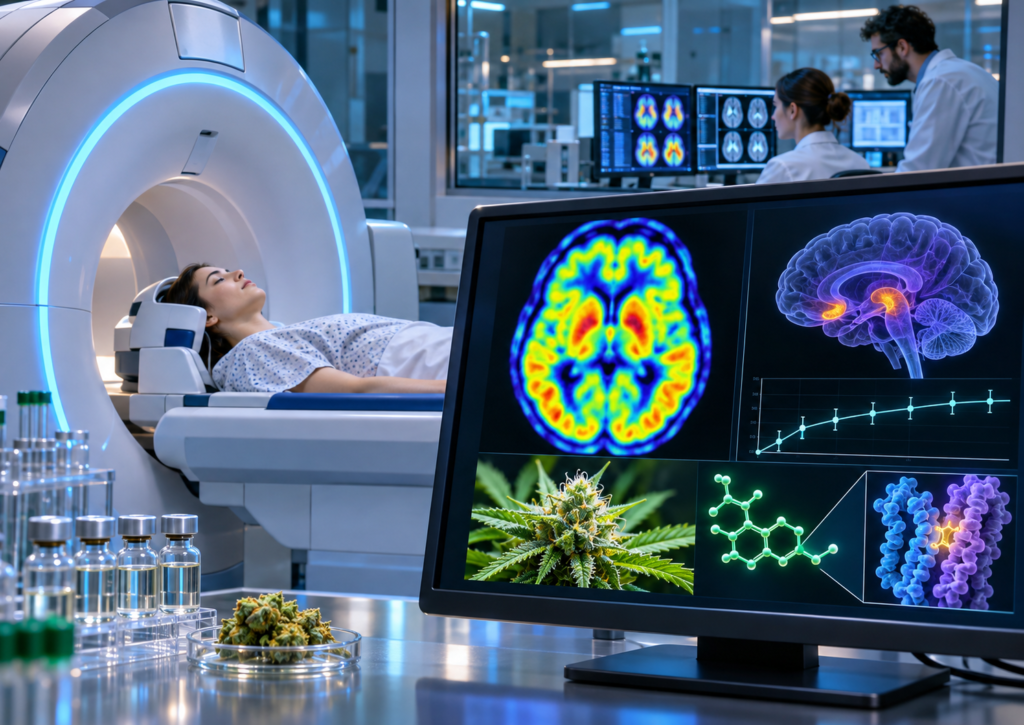
Ten healthy adults participated in this exploratory Phase IV study and received oral nabilone over seven days. Doses increased from 0.25 mg toward a target of 2 mg daily. Researchers performed positron emission tomography (PET) scans before and after treatment using the specialized [11C]CURB radiotracer, which allows scientists to assess FAAH availability in the living human brain.
Participants experienced increased cannabis-like effects, reduced energy, and diminished clear-headedness. Despite these recognizable pharmacological responses, the researchers found no significant average change in FAAH across the brain regions examined. [2]
We can stimulate cannabinoid receptors enough to feel substantial effects without necessarily producing a measurable change in the enzyme responsible for breaking down anandamide.
The researchers also accounted for a genetic variation known as rs324420, which can influence FAAH availability. That’s an important consideration because our biological starting points aren’t identical. Differences in genetics, endocannabinoid production, and enzyme regulation could influence how individuals respond to cannabinoid exposure.
Of course, ten participants aren’t enough to establish whether those individual differences predict FAAH responses to nabilone. The study also lacked a placebo group and lasted only seven days, leaving open the possibility of smaller, slower, or region-specific adaptations.
It’s equally important to recognize that researchers measured FAAH binding, not actual brain anandamide concentrations. An unchanged FAAH measurement doesn’t establish that anandamide signaling remained unchanged, nor does it mean other components of the ECS weren’t responding.
What Nabilone Can Tell Us About THC, Heavy Cannabis Use and Tolerance
Nabilone mimics important pharmacological effects of delta-9 THC, making this research particularly relevant to people who consume THC regularly. However, nabilone isn’t chemically identical to THC, and seven days of oral medication doesn’t reproduce years of heavy cannabis consumption.
Previous human PET research found approximately 14% to 20% lower FAAH binding in ten chronic cannabis users compared with 22 healthy controls. [3] Another landmark human imaging study found approximately 20% lower CB1 receptor availability in cortical brain regions among chronic daily cannabis smokers.
Following about four weeks of monitored abstinence, receptor availability recovered toward control levels. [4] Now we’re looking at two potentially interconnected adaptations – changes in the enzyme that breaks down anandamide and changes in the receptors through which both anandamide and THC communicate.
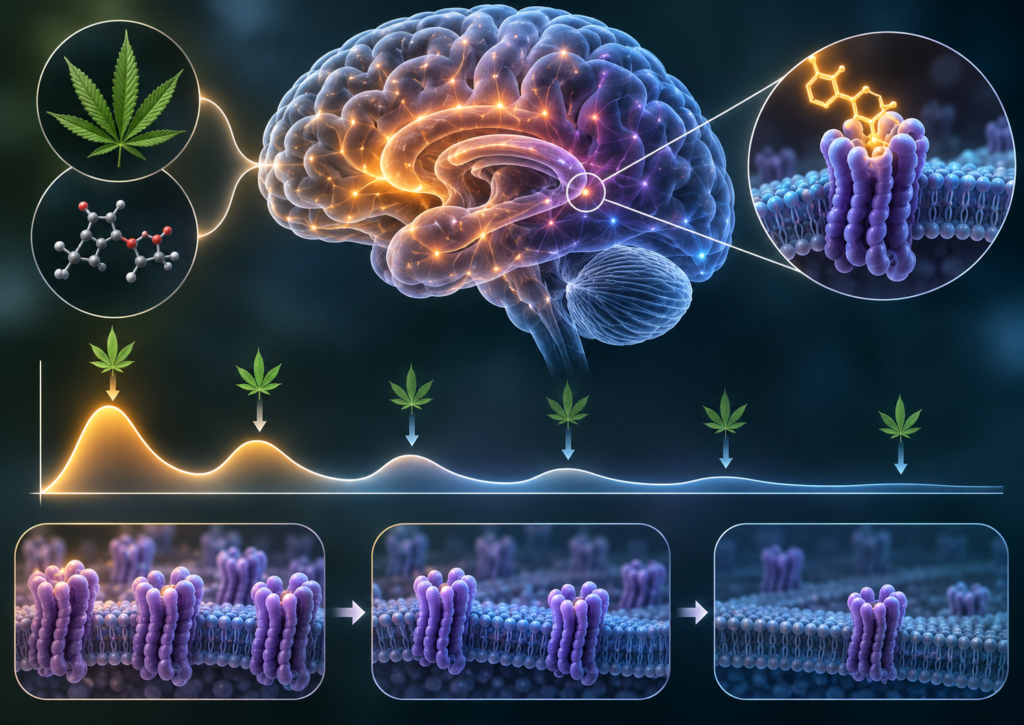
When someone tells me they’re consuming more THC but feeling less of its effects, this is where the research gets pretty interesting. Increasing the amount of cannabinoid reaching a receptor doesn’t necessarily restore that receptor’s responsiveness.
With heavy or prolonged THC exposure, the brain can adapt through mechanisms including receptor downregulation and desensitization. These adaptations may help explain why the same amount of THC no longer produces the effects someone once experienced.
Lower FAAH availability could represent another adaptation to chronic exposure, potentially influencing how long anandamide remains available. However, we don’t yet know whether this is a compensatory response to reduced cannabinoid receptor responsiveness.
The new nabilone findings don’t mean heavy THC consumption won’t influence FAAH. They suggest that longer exposure, different doses, delivery methods, or individual biological characteristics may be important in understanding the differences observed in chronic cannabis users.
ECS Balance Control, FAAH Recovery and Where the Research Needs to Go Next
Another human brain imaging study published in May 2026 examined FAAH during early cannabis abstinence. Fourteen individuals with cannabis use disorder completed two PET scans, and researchers found approximately a 10% increase in whole-brain FAAH binding following several days without cannabis. [5]
Together, these findings suggest that FAAH availability may change with patterns of cannabinoid exposure and abstinence.
For our work at the Global Cannabinoid Research Center, this raises an important question. Can we develop individualized approaches that reduce excessive THC exposure while supporting the body’s own endocannabinoid regulation without always requiring complete cannabinoid cessation?
I’m particularly interested in exploring the roles of CBGa, CBG, CBD and CBDa alongside dietary lipids, physical activity, and endogenous signaling molecules such as PEA and OEA. These compounds and lifestyle factors offer different avenues for investigating ECS regulation, but we don’t yet have human evidence establishing that these approaches reverse THC tolerance or normalize FAAH.
That’s where future research needs to focus. Larger human trials should compare THC and nabilone directly, examine longer exposure periods, and investigate FAAH alongside CB1 receptor availability and endocannabinoid concentrations.
I’d also like to see research examining what happens when individuals partially or substantially reduce THC consumption while continuing to use other cannabinoids, particularly those who depend on cannabinoid therapies to manage difficult symptoms.
The biggest takeaway here is that feeling the effects of THC and maintaining a well-regulated ECS aren’t necessarily the same thing. The plant introduces cannabinoids into our biology, but our bodies determine how those cannabinoids are received, processed, and responded to over time.
We’re not just studying what cannabinoids do to us. We’re studying what our bodies do with cannabinoids, how our biology adapts to them, and how we might support the regulatory system that was there long before we ever consumed the plant. Respecting our body with a good diet and healthy lifestyle is a big part of this.
That’s the science behind ECS Balance Control.
-Mike Robinson, Global Cannabinoid Research Center
Scientific References
[1] Lu, H.C., & Mackie, K. (2016). An Introduction to the Endogenous Cannabinoid System. Biological Psychiatry, 79(7), 516-525.
https://doi.org/10.1016/j.biopsych.2015.07.028
[2] Mahmood, R., Dheda, S.S., Poluga, C., et al. (2026). Testing the impact of cannabinoid stimulation on fatty acid amide hydrolase binding in the human brain: pilot [11C]CURB PET study. Journal of Cannabis Research. Published November 9, 2026. Peer-reviewed accepted article.
https://doi.org/10.1186/s42238-026-00531-8
[3] Boileau, I., Mansouri, E., Williams, B., et al. (2016). Fatty Acid Amide Hydrolase Binding in Brain of Cannabis Users: Imaging With the Novel Radiotracer [11C]CURB. Biological Psychiatry, 80(9), 691-701.
https://doi.org/10.1016/j.biopsych.2016.04.012
[4] Hirvonen, J., Goodwin, R.S., Li, C.T., et al. (2012). Reversible and regionally selective downregulation of brain cannabinoid CB1 receptors in chronic daily cannabis smokers. Molecular Psychiatry, 17(6), 642-649.
https://doi.org/10.1038/mp.2011.82
[5] Poluga, C., Dheda, S.S., Boachie, N., et al. (2026). PET imaging of FAAH in chronic Cannabis users: longitudinal assessment during short-term abstinence. Neuropsychopharmacology, 51, 2124-2131. https://doi.org/10.1038/s41386-026-02438-7
This article is educational commentary from GCRC. It is not a report of study findings and is not medical advice. Speak with a qualified healthcare professional about your own health.