
New Research: Endocannabinoid System Key in Migraine Treatment
Research done on reducing the pain and anxiety with Migraines, the 3rd most common disease in the world, will be featured in January's journal of Neurobiology and Disease. It was just made available...
 Mike Robinson
6 min read
Research done on reducing the pain and anxiety with Migraines, the 3rd most common disease in the world, will be featured in January's journal of Neurobiology and Disease. It was just made available via publishing hours ago. It was done in part done by the Department of Anatomy and Neurobiology, University of California, Irvine in collaboration with researchers in Italy.
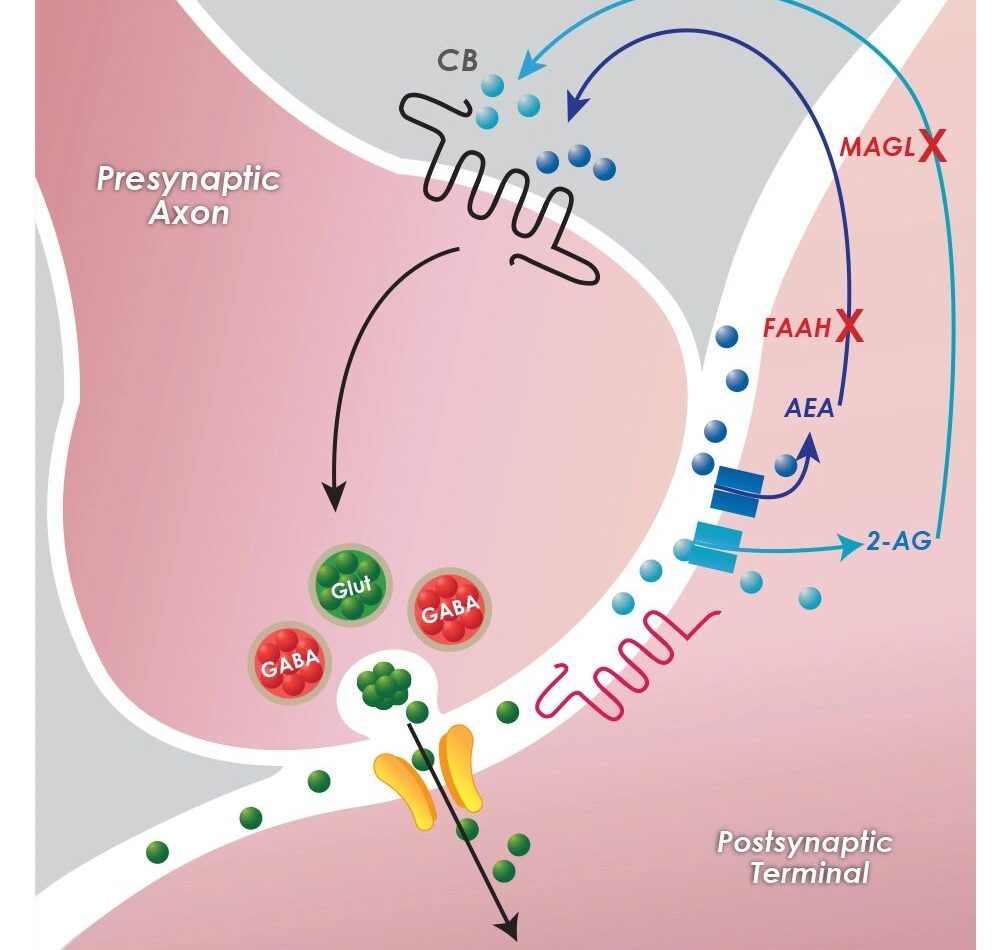
An amazing 12% of the population suffers from headaches of this sort, tend to have genetic factors, can be debilitating, and among other things are often the cause of secondary diagnostics – especially in the mental health arena as pain can literally drive you nuts. The findings of this study found that inhibition of the FAAH, an enzyme family that breaks down cannabinoids in the Endocannabinoid System (ECS).
FAAH is the principal catabolic enzyme for a class of bioactive lipids called the fatty acid amides (FAAs). Members of the FAAs include the endocannabinoids Anandamide (N-arachidonoylethanolamine) and 2-arachidonoylglycerol (2-AG) as well as other lipids and even the N-acyltaurines, which are agonists of the transient receptor potential (TRP) family of calcium channels – yet another active part of the ECS.
Quickly one can see how this study ties things together showing the very close relationship between the proper function of our ECS and why a person is experiencing Migraines. This groundbreaking research should lead to much more that will further the ability to produce better cannabinoid medicine for the future.
The conclusions specifically found that: "Peripheral inhibition of FAAH by URB937 showed an anti-hyperalgesia effect in two complementary rat models of episodic and chronic migraine. The increased availability of anandamide and PEA in the trigeminal ganglion blocks NTG-induced inflammatory mediators and neuropeptides gene expression in the trigeminal ganglion itself and in medulla, thus reducing trigeminal nociception. The present findings provide new insights into the complexity of mechanisms that may be involved in trigeminal, migraine-related nociception and suggest that FAAH inhibition might qualify as a therapeutic target for migraine pain, confirming the close relationship between migraine and the endocannabinoid system in nociceptive processing at the trigeminal level."
Characterization of the peripheral FAAH inhibitor, URB937, in animal models of acute and chronic migraine
Received 13 August 2020, Revised 14 October 2020, Accepted 27 October 2020, Available online 28 October 2020.
Highlights
Peripheral FAAH inhibitor, URB937, increased availability of anandamide and PEA.
URB937 counteracted hyperalgesia in the rat models of episodic and chronic migraine.
The reduced trigeminal nociception depended upon CB1 receptor activation
URB937 prevented the NTG-induced increase in neuropeptide and cytokine transcription.
Abstract
Inhibiting the activity of fatty-acid amide hydrolase (FAAH), the enzyme that deactivates the endocannabinoid anandamide, enhances anandamide-mediated signaling and holds promise as a molecular target for the treatment of human pathologies such as anxiety and pain. We have previously shown that the peripherally restricted FAAH inhibitor, URB937, prevents nitroglycerin-induced hyperalgesia – an animal model of migraine – and attenuates the activation of brain areas that are relevant for migraine pain, e.g. trigeminal nucleus caudalis and locus coeruleus. The current study is aimed at profiling the behavioral and biochemical effects of URB937 in animal models of acute and chronic migraine. We evaluated the effects of URB937 in two rat models that capture aspects of acute and chronic migraine, and are based on single or repeated administration of the vasodilating drug, nitroglycerin (NTG). In addition to nocifensive behavior, in trigeminal ganglia and medulla, we measured mRNA levels of neuropeptides and pro-inflammatory cytokines along with tissue levels of anandamide and palmitoylethanolamide (PEA), an endogenous agonist of peroxisome proliferator-activated receptor type-a (PPAR-a), which is also a FAAH substrate. In the acute migraine model, we also investigated the effect of subtype-selective antagonist for cannabinoid receptors 1 and 2 (AM251 and AM630, respectively) on nocifensive behavior and on levels of neuropeptides and pro-inflammatory cytokines. In the acute migraine paradigm, URB937 significantly reduced hyperalgesia in the orofacial formalin test when administered either before or after NTG. This effect was accompanied by an increase in anandamide and PEA levels in target neural tissue, depended upon CB1 receptor activation, and was associated with a decrease in calcitonin gene-related peptide (CGRP), substance P and cytokines TNF-alpha and IL-6 mRNA. Similar effects were observed in the chronic migraine paradigm, where URB937 counteracted NTG-induced trigeminal hyperalgesia and prevented the increase in neuropeptide and cytokine transcription.
The results show that peripheral FAAH inhibition by URB937 effectively reduces both acute and chronic NTG-induced trigeminal hyperalgesia, likely via augmented anandamide-mediated CB1 receptor activation. These effects are associated with inhibition of neuropeptidergic and inflammatory pathways.
Abbreviation
CB cannabinoid receptor CGRPcalcitonin gene-related peptide DMSO dimethylsulfoxide FAAH fatty-acid amide hydrolaseGAPDH Glyceraldehyde 3-phosphate dehydrogenase i.p. intraperitoneal IL-6 Interleukin 6 LC/MS liquid chromatography-mass spectrometry NTG nitroglycerin PEA palmitoylethanolamide PPAR-aperoxisome proliferator-activated receptor type-a TNC trigeminal nucleus caudalis TNF-alpha Tumor Necrosis Factor alpha TRPV1 transient receptor potential vanilloid 1
1. Introduction
Trigeminal hyperalgesia or facial allodynia have been used in animal models of migraine pain to simulate clinical symptomatology and to investigate the mechanisms related to migraine pain (Harriott et al., 2019). Systemic administration of nitroglycerin (NTG), a vasodilator that acts as nitric oxide donor, in rodents is a well-known animal model of migraine that reproduces multiple symptoms of migraine and induces, inter alia, hyperalgesia at the trigeminal and spinal levels (Demartini et al., 2019).
Modulation of endogenous cannabinoid signaling through inhibition of endocannabinoid deactivation has gained attention as a possible therapeutic target for several clinical disorders, including migraine pain (Ahn et al., 2009; Panlilio et al., 2013; Wortley et al., 2017; Greco et al., 2018a). Inhibitors of fatty-acid amide hydrolase (FAAH), the enzyme that catalyzes the cleavage of the endocannabinoid anandamide along with other endogenous fatty-acid amides, have demonstrated promising activity in animal models of migraine (Greco et al., 2015a, Greco et al., 2020). We have reported that the globally active FAAH inhibitor, URB597 (Kathuria et al., 2003), reduced c-Fos expression in the trigeminal nucleus caudalis (TNC), NTG-induced hyperalgesia at the orofacial formalin test and expression of neuronal nitric oxide synthase, calcitonin gene-related peptide (CGRP) and cytokine gene expression in various central and peripheral nervous structures (Greco et al., 2020).
Unlike URB597, its derivative URB937 is actively extruded from the central nervous system, and therefore increases anandamide levels solely in peripheral tissues (Clapper et al., 2010). We previously reported that this agent attenuated NTG-induced nocifensive behavior and neuronal activation in brain nuclei that are known to play a role in migraine (Greco et al., 2015a), suggesting that peripheral FAAH might offer a new molecular target for migraine pain (Greco et al., 2020). In this context, it is worth noting that URB937 exerts profound analgesic effects in animal models (Piomelli and Sasso, 2014) but does not display any of the intoxicating properties that are typical of direct-acting cannabinoid receptor agonists (e.g. sedation, motor dysfunction, appetite stimulation) (Vozella et al., 2019). To gain further insights into the mechanisms of anti-migraine action of URB937, in the present study we characterized the pharmacological effects of URB937 in two rat models of acute and chronic migraine, which are based on systemic administration of NTG (Greco et al., 2018b; Demartini et al., 2019).
Click on the title and read the balance of the publication
–Mike Robinson, Founder – Global Cannabinoid Research Center / GCRC Publications
This article is educational commentary from GCRC. It is not a report of study findings and is not medical advice. Speak with a qualified healthcare professional about your own health.