CBD and Wound Healing: New Research Points Toward a Much Bigger Role for Cannabinoid Science
 Mike Robinson
14 min read
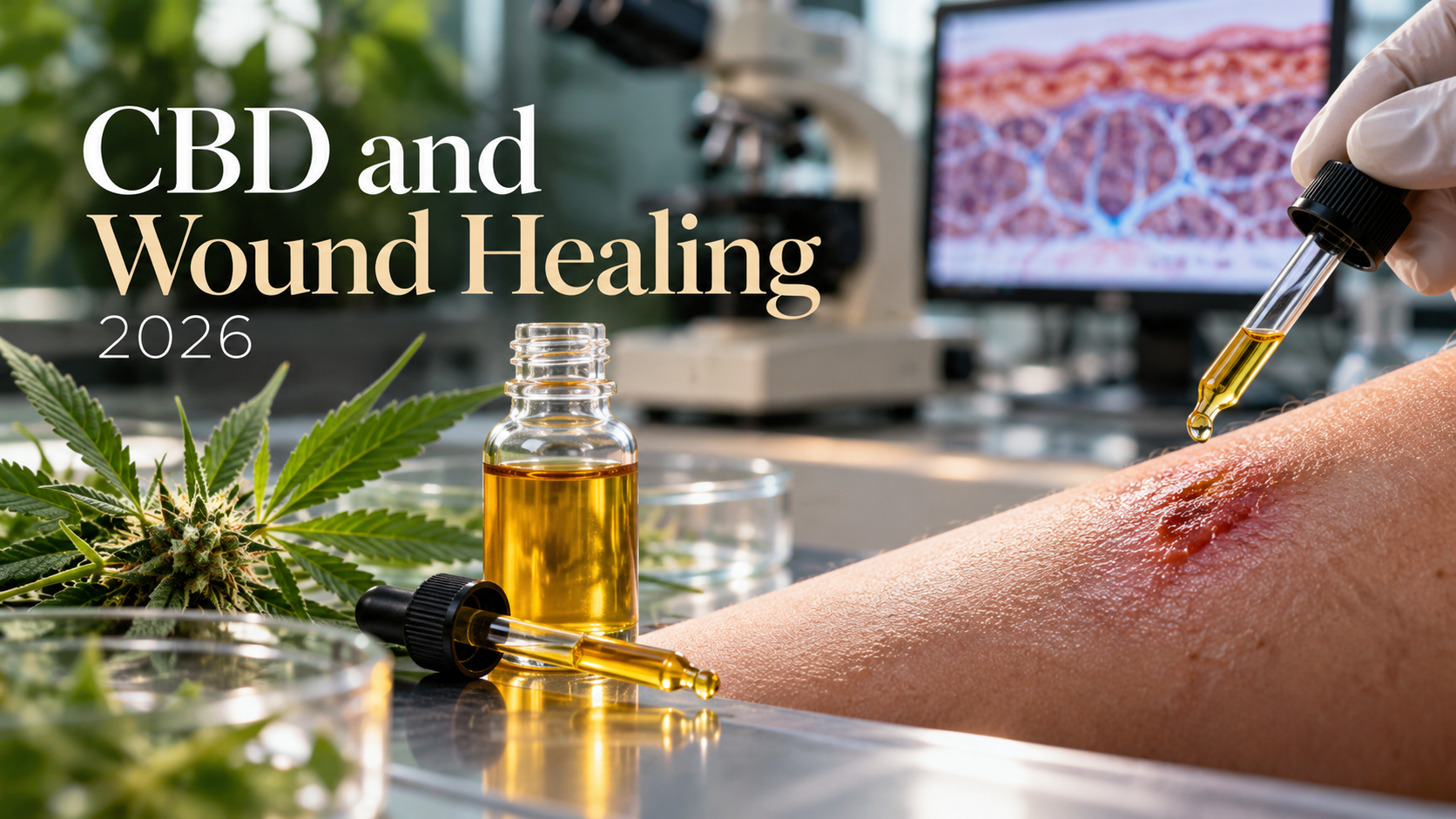
A new systematic review published October 31, 2026, takes a serious look at a question cannabinoid researchers have been circling for years: can cannabidiol, better known as CBD, meaningfully influence the biological process of skin repair? The answer coming from the available research is increasingly interesting, but it’s nowhere near as simple as saying CBD heals wounds.
The review examined the available in vivo and human research involving CBD and cutaneous wound healing. Across the studies evaluated, researchers reported effects involving wound closure, collagen deposition, new blood vessel formation, fibroblast migration, inflammatory activity, oxidative stress, and tissue remodeling. Most of the included studies produced at least some favorable findings, although one experimental wound model found no significant improvement compared with controls. More importantly, most of the evidence remains preclinical rather than coming from large, controlled human trials. [1]
That’s exactly why this research deserves more than a headline. Wound healing isn’t a single biological event. It’s a coordinated sequence involving immune cells, inflammatory signaling, oxidative balance, fibroblast migration, keratinocytes, extracellular matrix production, collagen remodeling, vascular growth, and restoration of the skin barrier. CBD appears capable of influencing several pieces of that process, and the Endocannabinoid System provides a plausible biological framework for understanding why. [1,7,8]
At the same time, the newer research is showing us something else that’s just as important. The future of cannabinoid wound research may depend as much on how CBD is delivered as it does on CBD itself. Some of the strongest experimental findings aren’t coming from ordinary topical oils or creams. They’re coming from CBD incorporated into lipid nanoparticles, hydrogels, alginate scaffolds, and other engineered delivery systems designed to keep the cannabinoid at the target tissue and control how it’s released. [2,3]
What the New Systematic Review Actually Found
The 2026 systematic review searched major scientific databases including PubMed, EMBASE, Web of Science, Scopus, the Cochrane Library, LILACS, and MEDLINE. The work followed PRISMA methodology and was registered in PROSPERO. The investigators initially identified 190 records before screening studies for eligibility. The published abstract reports six included studies, while the detailed Results section reports five and states that four of five demonstrated beneficial effects. That internal reporting inconsistency is worth noting, because it reminds us why reading beyond an abstract matters when evaluating cannabinoid science. [1]
The research included several very different approaches to CBD and skin repair. Investigators studied CBD-enriched ointments in people with inflammatory skin disorders and scars; CBD in surgical incision models; CBD combined with Manuka honey in full-thickness equine wounds; CBD containing alginate hydrogels; and CBD-loaded lipid nanoparticles placed into a polyvinyl alcohol and sodium alginate hydrogel scaffold. [1-6]
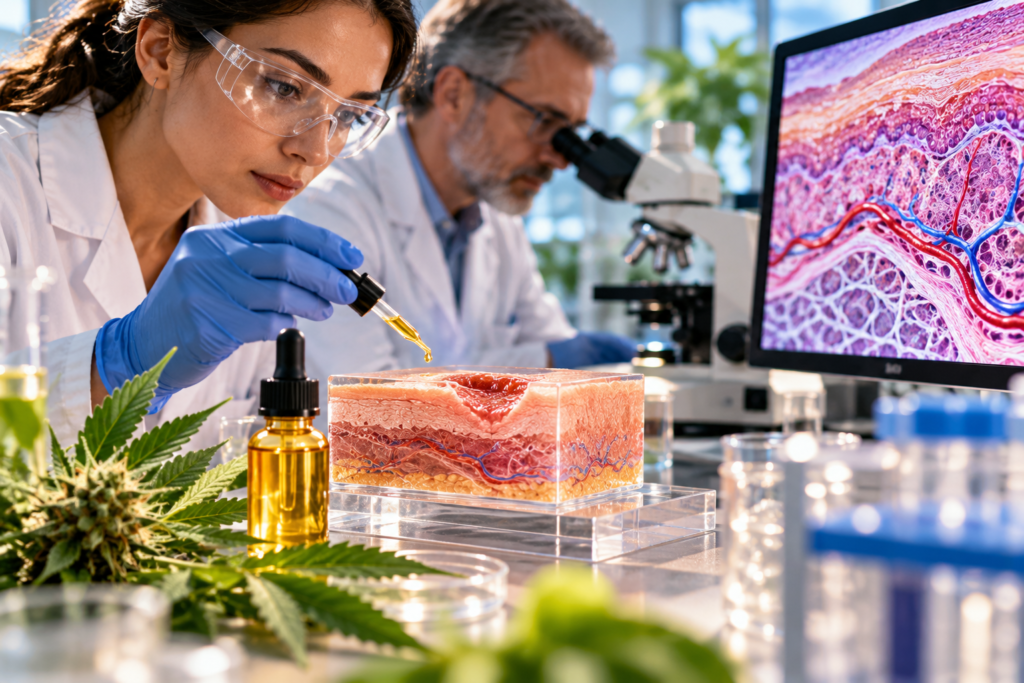
Because those models and formulations are so different, the results shouldn’t be interpreted as though scientists repeatedly tested one standardized CBD wound product. They didn’t. Different species were used, different wound types were studied, CBD concentrations varied, delivery systems varied, and the biological measurements weren’t uniform. The systematic review identified this as a major limitation. [1]
One of the strongest experiments came from a 2024 study involving CBD-loaded lipid nanoparticles incorporated into a polyvinyl alcohol and sodium alginate hydrogel. In laboratory testing with human dermal fibroblasts, CBD-loaded nanoparticles significantly increased cell migration in a scratch wound model. Fibroblast migration reached approximately 49 percent after 24 hours and 84.5 percent after 48 hours, compared with approximately 32.4 percent and 65.7 percent in untreated controls. The formulation also reduced intracellular reactive oxygen species, with the highest tested concentration producing a substantial reduction in oxidative stress under the experimental conditions. [2]
The researchers then moved into an animal wound model. Rats treated with the CBD nanoparticle hydrogel began showing significantly greater healing than animals receiving the blank hydrogel beginning around day seven. The differences continued through days 14 and 21, and by day 28 the CBD-treated wounds approached complete closure. Histological examination also showed changes in collagen density, vascularization, dermal architecture, epithelial organization, and inflammatory cell infiltration. The researchers reported approximately a 35 percent improvement in wound closure rate by day 28. [2]
Another experimental approach used CBD inside an alginate hydrogel crosslinked with zinc ions. This matters because the formulation wasn’t simply CBD suspended in a carrier. The alginate-zinc hydrogel itself showed properties relevant to wound management, including antibacterial activity and promotion of angiogenesis. Adding CBD brought additional antioxidant and anti-inflammatory effects to the system. In vivo testing found greater collagen deposition, granulation tissue development, vascular formation, reduced inflammatory infiltration, and accelerated wound healing. [3]
These results are encouraging, but other findings keep the story grounded. A preliminary study involving six horses tested topical 1 percent CBD in Manuka honey against several comparison treatments in full-thickness distal limb wounds. Researchers found no significant differences in wound area, daily healing rate, or time to complete healing among the groups. CBD didn’t improve the primary wound healing measurements in that model. [4]
A 2024 rat surgical wound study provided another important wrinkle. Researchers compared CBD with several Cannabis sativa-derived preparations and measured biochemical markers related to tissue repair. CBD didn’t outperform the broader hemp preparations across the measured markers, and the investigators concluded that the hemp extract showed greater overall wound healing potential in that particular experimental model. [5]
That doesn’t make the CBD findings weaker science. It makes them better science. A compound that works everywhere, at every dose, in every formulation, and in every biological system should make us suspicious. Real biology is messy. The wound type matters. The cannabinoid concentration matters. The delivery technology matters. Other plant compounds may matter. Timing matters. The surrounding inflammatory environment matters. That’s exactly the type of complexity we’d expect when dealing with the ECS.
Why the Endocannabinoid System Matters in Skin Repair
The skin is far more biologically active than most people realize. It’s an immune organ, a sensory organ, a barrier, a vascular structure, and an active biochemical environment. It also contains components of the Endocannabinoid System.
CB1 and CB2 cannabinoid receptors have been identified in several skin cell types and structures, while endogenous signaling compounds such as anandamide and 2-AG interact with a broader network that includes cannabinoid receptors, TRP channels, enzymes involved in endocannabinoid metabolism, and other signaling pathways. Research has linked the cutaneous ECS with skin homeostasis, barrier integrity, inflammation, cellular growth, differentiation, immune function, fibrosis, and wound repair. [7,9]
This becomes especially important when tissue is damaged. Successful wound healing occurs through overlapping phases rather than one simple response. The body first controls bleeding and initiates inflammation. Immune cells move into the damaged area. The body must clear damaged tissue and potential pathogens. Fibroblasts migrate into the wound and begin rebuilding the extracellular matrix. Keratinocytes move across the wound surface to reconstruct the epidermal barrier. New blood vessels develop to support regenerating tissue. Collagen is deposited, reorganized, and remodeled as the tissue matures.
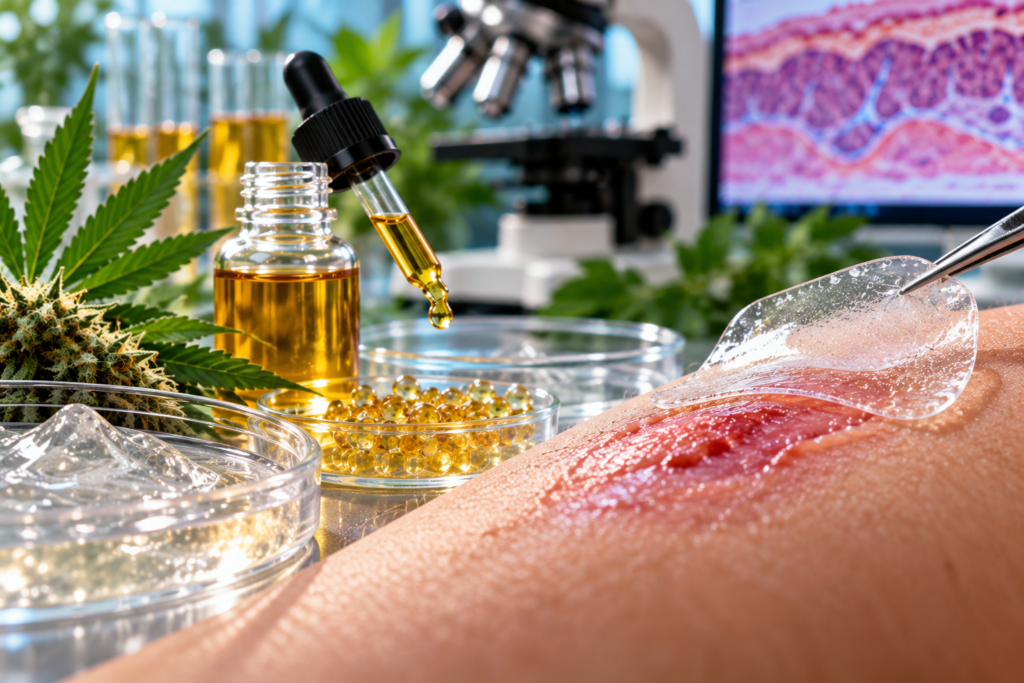
Inflammation is necessary during this process. The goal isn’t to eliminate inflammation. The goal is appropriate inflammatory signaling followed by resolution when that response is no longer needed. Chronic wounds often become stuck in an abnormal environment involving persistent inflammation, excessive oxidative stress, impaired vascularization, disrupted cellular migration, infection, metabolic dysfunction, or combinations of these problems.
That’s one reason cannabinoid signaling is so interesting in this context. The ECS is fundamentally involved in regulation and adaptation. Research examining the cutaneous ECS has reported that CB1 and CB2 signaling can influence fibrosis and repair differently. Experimental evidence has associated CB1 receptor inactivation and CB2 receptor activation with anti-fibrotic activity, while CB2 activation has also been associated with re-epithelialization. PPAR gamma signaling has also been linked to the regulation of fibrosis and wound-related processes. [7]
CBD complicates this in a very useful way because it doesn’t behave like THC. THC interacts more directly with CB1 and CB2 receptors, particularly CB1. CBD has relatively weak direct affinity for the primary binding sites of those receptors and influences a broader collection of signaling pathways. Research on skin biology has linked CBD to TRP channel activity, PPAR signaling, oxidative responses, inflammatory signaling, and indirect changes in endocannabinoid pathways. [8,9]
Oxidative stress deserves particular attention. Reactive oxygen species are normal parts of cellular signaling, but excessive oxidative activity can damage lipids, proteins, membranes, and other cellular structures. In chronic or poorly healing wounds, that oxidative environment can contribute to the problem.
Laboratory research in human keratinocytes has shown that CBD can partially protect cells against changes caused by hydrogen peroxide-induced oxidative stress. CBD reduced several markers associated with lipid peroxidation and helped maintain proteins involved in redox regulation, protein folding, protein degradation, and cellular survival. [8]
That finding doesn’t prove CBD heals human wounds, but it helps explain why researchers continue finding effects that extend beyond simple inflammation. Wound repair depends upon cells surviving, migrating, communicating, producing structural proteins, and responding appropriately to oxidative and inflammatory signals.
Fibroblasts are especially important. They’re part of the construction crew of wound repair. Fibroblasts migrate into injured tissue and help produce extracellular matrix and collagen, rebuilding the structural framework that eventually becomes repaired skin. The increased fibroblast migration seen in the CBD nanoparticle research therefore carries more biological significance than a simple measurement of whether a wound looked smaller. [2]
Collagen tells another part of the story. Collagen provides structural strength to healing tissue, but simply producing more collagen isn’t automatically better. Collagen has to be deposited, organized, and eventually remodeled appropriately. Excessive collagen production can contribute to fibrosis and abnormal scarring. This is another reason ECS signaling and wound repair shouldn’t be reduced to the idea that more activity is always better. Balance matters.
Angiogenesis is equally important. Healing tissue needs oxygen and nutrients, so restoring and growing blood vessels are critical parts of repair. Both of the advanced hydrogel studies reported findings involving vascular development. [2,3] That creates a fascinating intersection between cannabinoid science, regenerative medicine, and biomaterial engineering.
Why the Delivery System May Be Just as Important as CBD
One of the most important messages from this research isn’t about CBD alone. It’s about delivery.
CBD is highly lipophilic and poorly soluble in water. Those characteristics create challenges when researchers try to deliver predictable amounts of CBD into biological tissues. Stability, absorption, release rate, local concentration, and how long the compound remains available can all affect whether a formulation produces the intended result. Reviews of topical CBD science have repeatedly noted that delivery through human skin remains an important research problem. [9]
That’s why the nanoparticle study is particularly interesting. Instead of simply mixing CBD into a topical product, researchers encapsulated CBD inside lipid nanoparticles and then incorporated those nanoparticles into a polyvinyl alcohol and sodium alginate hydrogel scaffold. The resulting system was designed to protect the CBD, improve its biocompatibility, and provide localized, sustained release. [2]
Under the experimental conditions, the CBD-loaded nanoparticles showed greater stability and lower cytotoxicity toward dermal fibroblasts than unencapsulated CBD. The hydrogel itself showed release characteristics that keep the compound available over time rather than delivering everything at once. [2]
That’s a completely different proposition from putting CBD isolate into a jar of cream.
The alginate and zinc hydrogel study makes the same point from a different angle. In that research, the carrier wasn’t biologically neutral. The hydrogel itself brought antibacterial and angiogenic characteristics to the wound environment, while CBD contributed antioxidant and anti-inflammatory properties. [3]
So when the combination improves healing, we can’t scientifically give all the credit to CBD.
The material matters. Zinc matters. Moisture retention matters. Controlled release matters. Local tissue exposure matters. The physical environment surrounding the wound matters. The cannabinoid is one component of a much larger therapeutic system.
That’s where cannabinoid research is becoming far more sophisticated.
For years, cannabinoid conversations have revolved around which molecule we’re using and how many milligrams we’re giving. CBD, THC, CBG, CBN, CBGA, THCA, and other cannabinoids have largely been discussed as though the molecule alone determines the outcome.
It doesn’t.
A cannabinoid swallowed in a capsule, inhaled, placed under the tongue, incorporated into a conventional cream, delivered across intact skin, encapsulated inside lipid nanoparticles, or released from a hydrogel scaffold represents a very different pharmacological situation.
The same molecule can create completely different tissue exposure depending on the delivery system.
This wound research demonstrates that point beautifully.
It also explains why we should be careful when applying this research to commercially available CBD topicals. A consumer CBD cream and an engineered CBD lipid nanoparticle hydrogel aren’t interchangeable products simply because both contain cannabidiol.
The human evidence makes that limitation even clearer. One frequently cited study involved only 20 people with psoriasis, atopic dermatitis, or scars who used a CBD-enriched ointment twice daily for three months. The investigators reported improvements in hydration, transepidermal water loss, elasticity, symptoms, and several clinical measurements, with no documented irritant or allergic reactions. However, the study itself was described as spontaneous, anecdotal, and retrospective. It wasn’t a randomized controlled trial demonstrating that CBD heals open human wounds. [6]
That’s a very important distinction.
Skin disease, scars, and active wounds aren’t interchangeable conditions.
What This Means for the Future of Cannabinoid Medicine
The strongest conclusion from this new systematic review isn’t that CBD should now be considered a proven wound treatment. The evidence doesn’t support that conclusion.
The stronger conclusion is that CBD has enough biological activity within systems involved in tissue repair to justify much better research.
We’re seeing experimental effects involving fibroblast migration, collagen deposition, angiogenesis, oxidative stress, inflammatory cell infiltration, epithelial organization, and wound closure. [1-3] We’re also seeing negative or mixed outcomes showing that CBD isn’t universally beneficial across every model. [4,5]
That’s exactly the kind of evidence base that should lead to well-designed human trials.
Researchers need standardized formulations and clearly defined CBD concentrations. Different wound types need to be studied separately because a diabetic ulcer isn’t the same biological environment as a surgical incision, burn, pressure injury, inflammatory lesion, or uncomplicated traumatic wound. Pharmacokinetic research is needed to determine how much CBD enters damaged human tissue and how long biologically meaningful concentrations remain.
We also need direct comparisons between delivery systems. We should compare CBD in a conventional ointment with CBD delivered through hydrogels, nanoparticles, emulsions, and other controlled-delivery technologies. Researchers should compare isolated CBD with broader cannabinoid formulations rather than assuming the single molecule will always produce the greatest effect.
The 2024 surgical wound study is particularly interesting in that regard because broader hemp preparations appeared more promising than isolated CBD in some measurements. [5]
That opens an entirely different research door; What happens when CBD is combined with CBG? And what happens with acidic cannabinoids such as CBGA or CBDA?
Could different cannabinoids act through overlapping but complementary pathways involving CB1, CB2, TRP channels, PPAR signaling, inflammatory mediators, oxidative signaling, microbial activity, and endogenous cannabinoid metabolism?
We don’t know yet; those are research questions, not treatment recommendations.
That’s also why serious wounds shouldn’t be treated based on internet claims about CBD. Chronic wounds, diabetic ulcers, infections, surgical complications, severe burns, and wounds that fail to heal can become serious medical problems and require appropriate professional wound care. Nothing in this systematic review suggests replacing established medical treatment with a CBD product. [1]
But we shouldn’t miss what the science is telling us either.
CBD is interacting with wound biology in ways that deserve serious attention. The skin has its own active endocannabinoid signaling environment. Fibroblasts, keratinocytes, immune cells, vascular systems, oxidative pathways, collagen production, and inflammatory signaling all participate in the healing process, and cannabinoid related signaling intersects with several of those systems. [7-9]
Then add modern delivery science.
Nanoparticles can change stability and tissue exposure. Hydrogels can maintain moisture and control release. Biomaterials can provide their own structural and biological properties. Cannabinoids could be incorporated into platforms engineered around the actual wound environment, rather than applied as another topical ingredient.
That’s why I think the larger story coming from this research isn’t simply “CBD for wound healing.” The more important story is where cannabinoid science may be heading.
We’re beginning to see cannabinoids move into regenerative medicine, engineered biomaterials, targeted delivery, nanotechnology, and tissue-specific pharmacology. Researchers aren’t simply asking whether CBD works anymore. They’re beginning to ask how it works, where it works, how it needs to be delivered, which biological pathways it influences, and what other compounds or technologies can improve the response.
That’s a much more mature question for cannabinoid science, and it’s exactly where this research needs to go.
Mike Robinson, Global Cannabinoid Research Center
[1] The Use of Cannabidiol in Cutaneous Wound Healing: A Systematic Review. The FASEB Journal. 2026;40(20). DOI: 10.1096/fj.202601469R.
[2] Cannabidiol-Loaded Lipid Nanoparticles Incorporated in Polyvinyl Alcohol and Sodium Alginate Hydrogel Scaffold for Enhancing Cell Migration and Accelerating Wound Healing. Gels. 2024;10(12):843. DOI: 10.3390/gels10120843.
[3] A cannabidiol-containing alginate based hydrogel as novel multifunctional wound dressing for promoting wound healing. Biomaterials Advances. 2022;134:112560. DOI: 10.1016/j.msec.2021.112560.
[4] Effects of topical treatment of cannabidiol extract in a unique manuka factor 5 manuka honey carrier on second intention wound healing on equine distal limb wounds: a preliminary study. Australian Veterinary Journal. 2020;98(6):250-255. DOI: 10.1111/avj.12932.
[5] Therapeutic potential of cannabis for surgical wound healing in rats. Veterinarni Medicina. 2024;69(8):297-306. DOI: 10.17221/21/2024-VETMED.
[6] A therapeutic effect of CBD-enriched ointment in inflammatory skin diseases and cutaneous scars. La Clinica Terapeutica. 2019;170(2). DOI: 10.7417/CT.2019.2116.
[7] Cutaneous endocannabinoid system: Does it have a role on skin wound healing bearing fibrosis? Pharmacological Research. 2020;159:104862. DOI: 10.1016/j.phrs.2020.104862.
[8] Protective effects of cannabidiol on the membrane proteins of skin keratinocytes exposed to hydrogen peroxide via participation in the proteostasis network. Redox Biology. 2021;46:102074. DOI: 10.1016/j.redox.2021.102074.
[9] Therapeutic Potential of Cannabidiol for Skin Health and Disorders. Clinical, Cosmetic and Investigational Dermatology. 2020;13:927-942. DOI: 10.2147/CCID.S286411
This article is educational commentary from GCRC. It is not a report of study findings and is not medical advice. Speak with a qualified healthcare professional about your own health.